Client Information
This is a plugin that lets you get basic information from your application's client. It's easy to use and supports different platforms (Android, iOS, and Web). There are four different information types: "application information", "software information", "operating system information", and "device information".
Pub
License: MIT
iOS screenshot
https://raw.githubusercontent.com/Kent1011/client_information/master/screens/ios_screenshot.png
Android screenshot
https://raw.githubusercontent.com/Kent1011/client_information/master/screens/android_screenshot.png
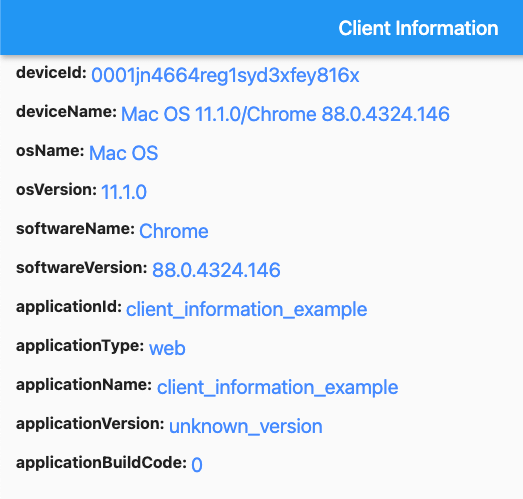
Web screenshot
https://raw.githubusercontent.com/Kent1011/client_information/master/screens/web_screenshot.png
Information Types
There are 4 different types:
- Application Information
- Software Information
- Operating System Information
- Device Information
Application Information
Application information is all about the application you build. And notice that applicationId is not supported for web applications.
| Attribute |
iOS |
Android |
Web |
applicationId
String |
⭕
bundleIdentifier |
⭕
package name |
❌
default: application name |
applicationType
String (app/web) |
⭕ |
⭕ |
⭕ |
applicationName
String |
⭕ |
⭕ |
⭕ |
applicationVersion
String |
⭕ |
⭕ |
⭕ |
applicationBuildCode
String |
⭕ |
⭕ |
⭕ |
Software Information
"Software" stands for the "software" that runs your application, such as "Operating System" for iOS/Android projects or "Browser" for web projects.
| Attribute |
iOS |
Android |
Web |
softwareName
String |
⭕
OS name |
⭕
OS name |
⭕
Browser name |
softwareVersion
String |
⭕
OS version |
⭕
OS version |
⭕
Browser version |
Operating System Information
OS information will show you the OS's name and version. Notice: Web projects may not get this information if the browser's user-agent doesn't contain any information about the operating system.
| Attribute |
iOS |
Android |
Web |
osName
String |
⭕
OS name |
⭕
OS name |
⚠️
OS name
(*unknown possible) |
osVersion
String |
⭕
OS version |
⭕
OS version |
⚠️
OS Version
(*unknown possible) |
osVersionCode
String |
⭕
iOS version(number) |
⭕
Android API level |
⚠️
OS Version(number)
(*unknown: -1) |
Device Information
The device information will display device's ID and name. Note that web projects don't support real deviceId, so they will use the package uuid to generate a unique string and save to the browser's cookie.
| Attribute |
iOS |
Android |
Web |
deviceId
String |
⭕ |
⭕ |
⭕ |
deviceName
String |
⭕ |
⭕ |
❌
default: osName osVersion / browserName browserVersion
(e.g. iOS 14 / Chrome 88.0) |
Getting Started
In the pubspec.yaml of your flutter project, add the following dependency:
dependencies:
  ...
  client_information: ^2.2.0
In your project add the following import:
import 'package:client_information/client_information.dart';
Then, you can get information like this:
// Get client information
ClientInformation info = await ClientInformation.fetch();

print(info.deviceId); // EA625164-4XXX-XXXX-XXXXXXXXXXXX
print(info.osName); // iOS
Decoration
Starting from version 2.1.0, you can customize some information by passing the decorators. Like below:
var information = await ClientInformation.fetch(
      // you can pass decorators to decoration the value before it return.
      decorators: ClientInformationDecorators(
        deviceId: (oriInfo, value) =>
            'prefix-$value-${oriInfo.applicationName}',
      ),
    );
Or, you can use extension method like this:
var information = await ClientInformation.fetch();
print('Original DeviceId: ${information.deviceId}');
// Original DeviceId: EA625164-4XXX-XXXX-XXXXXXXXXXXX

var decoratedInfo = information.decoration(deviceId: (oriInfo, value) => '$value-some-suffix-string-here');
print('Decorated DeviceId: ${decoratedInfo.deviceId}');
// Decorated DeviceId: EA625164-4XXX-XXXX-XXXXXXXXXXXX-some-suffix-string-here
Mock Data for Test
Starting from version 1.0.2, you can mock data or enable "mockMode" to facilitate testing. Here is how to set it up:
In your test file:
setUp(() async {
  // Change to "MockMode" and set the default data you need.
  ClientInformation.mockOn(
      deviceId: 'mock_device_id', osName: 'MyCustomOS');
});

tearDown(() {
  // Close the "MockMode" in tearDown method
  ClientInformation.mockOff();
});

// Run your test
test('`deviceId` will be "mock_device_id"', () async {
  ClientInformation info = await ClientInformation.fetch();
  expect(info.deviceId, 'mock_device_id');
});


 v2.2.0