English project snapshot. Visit GitHub for the latest content.
playing_cards
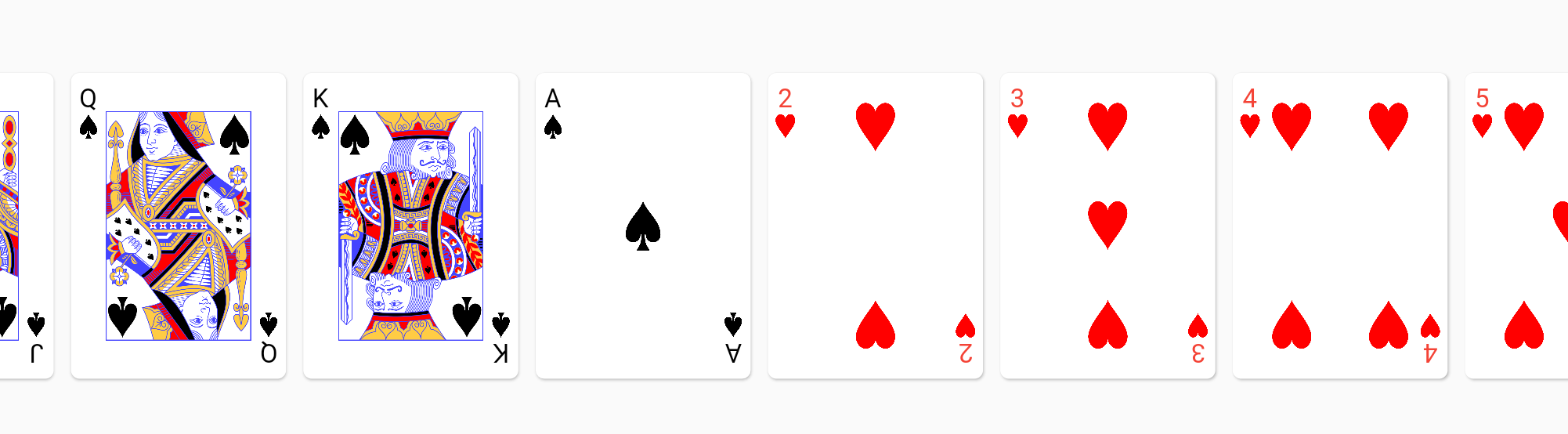
The playing_cards package for Flutter allows you to easily render playing cards from a standard 52 card deck. Good defaults are provided out of box, but full customization is possible if a style object is provided.
Getting Started
Here's a quick video overview if you don't like reading :-) https://www.youtube.com/watch?v=f9tOu972nhI
To import:
import 'package:playing_cards/playing_cards.dart' ;
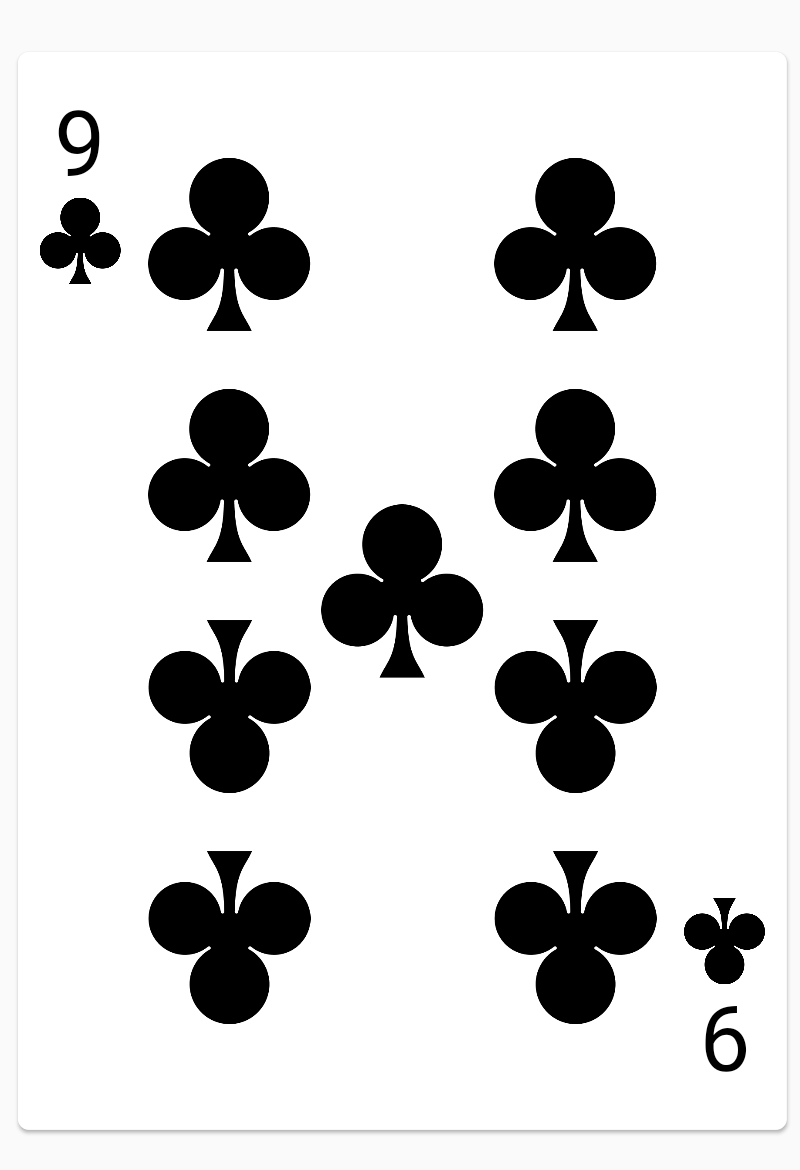
And here is a simple usage to render a nine of clubs:
PlayingCardView (card: PlayingCard (Suit .clubs, CardValue .nine))
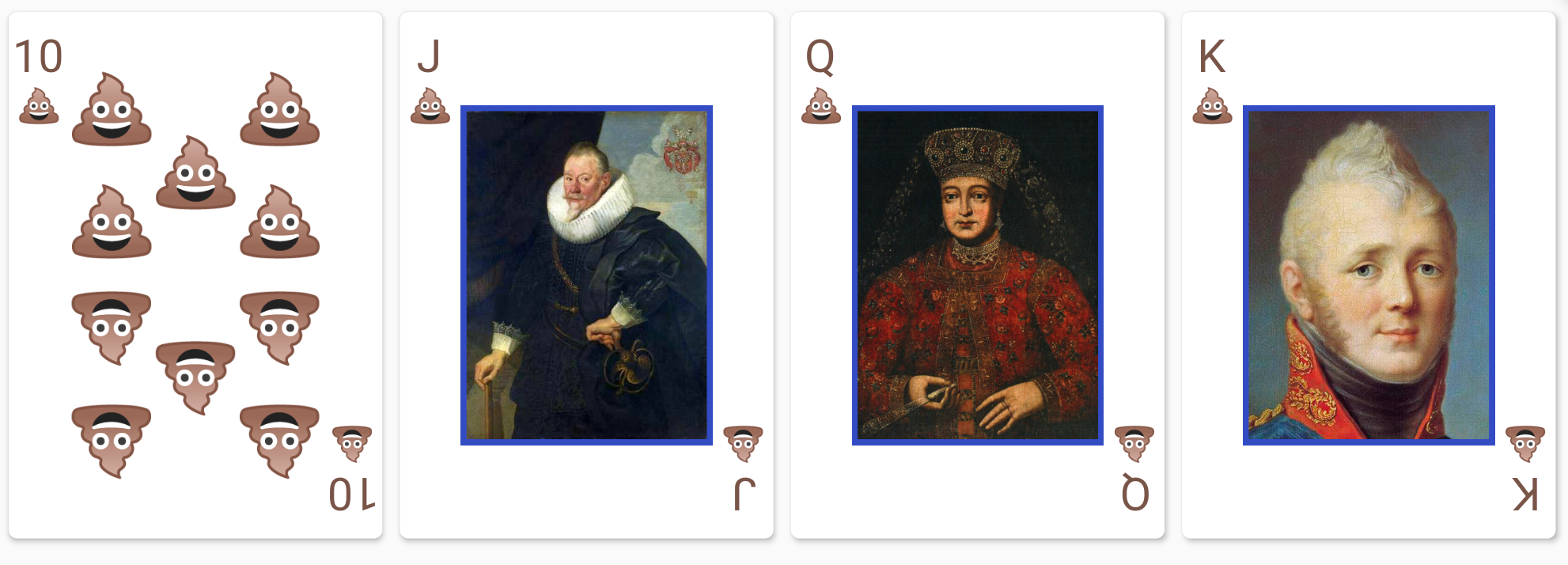
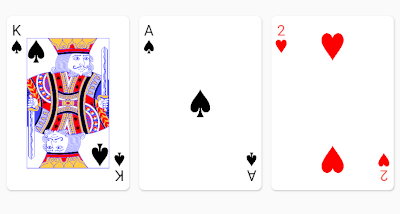
Here is an example of a fully styled deck:
PlayingCardViewStyle myCardStyles = PlayingCardViewStyle (suitStyles: {
Suit .spades: SuitStyle (
builder: (context) => FittedBox (
fit: BoxFit .fitHeight,
child: Text (
"💩" ,
style: TextStyle (fontSize: 500 ),
),
),
style: TextStyle (color: Colors .brown),
cardContentBuilders: {
CardValue .jack: (context) =>
Image .asset ("assets/jack_of_spades.png" ),
CardValue .queen: (context) =>
Image .asset ("assets/queen_of_spades.png" ),
CardValue .king: (context) =>
Image .asset ("assets/king_of_spades.png" ),
})
});
List <PlayingCard > deck = standardFiftyTwoCardDeck ();
Container (
height: 150 ,
child: SingleChildScrollView (
scrollDirection: Axis .horizontal,
child: Row (
children: deck.map ((e) => PlayingCardView (card: e, style: myCardStyles)).toList (),
),
),
),
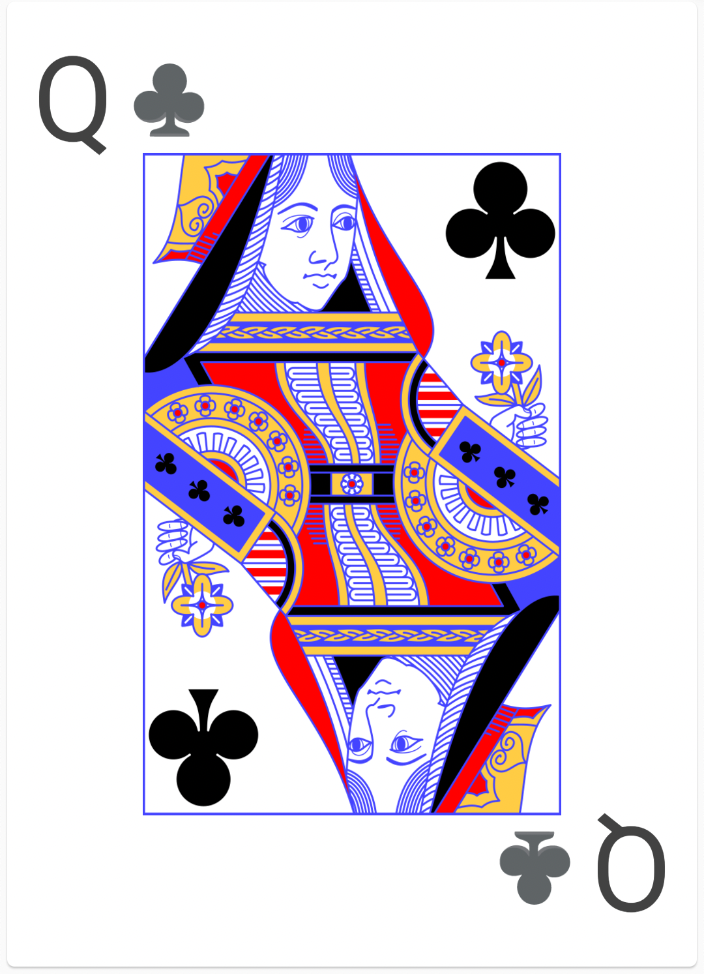
PlayingCardViewStyle also accepts a suitBesideLabel: true option to render the suit next to the rank, instead of below:
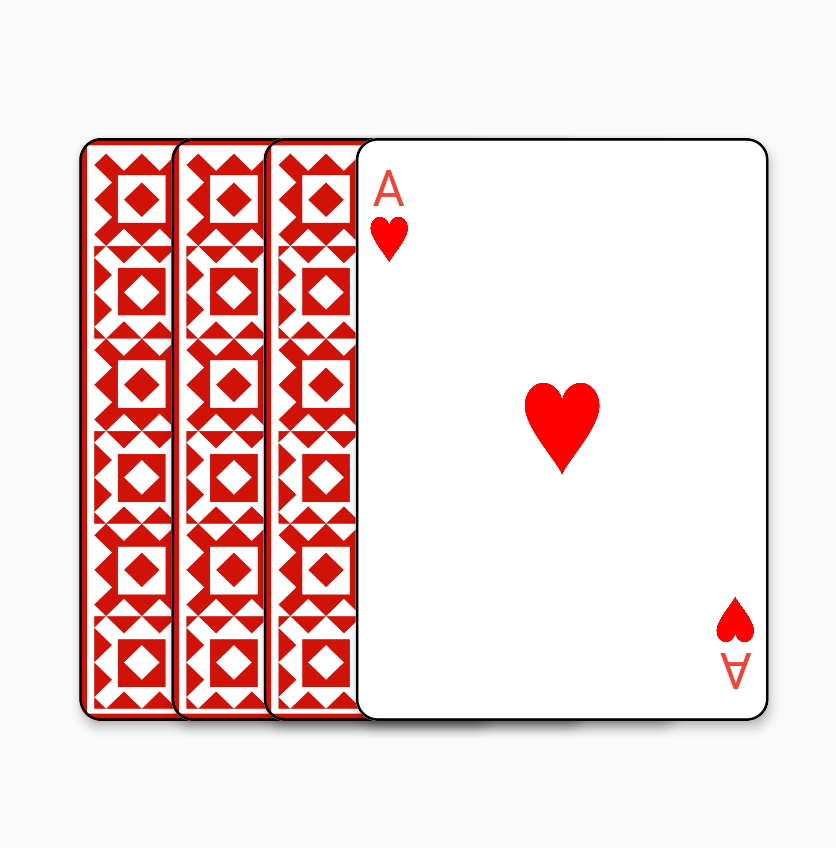
A flat fan widget is also provided for the common use cases of fanning cards out horizontally:
ShapeBorder shape = RoundedRectangleBorder (
borderRadius: BorderRadius .circular (8 ),
side: BorderSide (color: Colors .black, width: 1 ));
FlatCardFan (children: [
PlayingCardView (
card: PlayingCard (Suit .hearts, CardValue .ace),
showBack: true ,
elevation: 3.0 ,
shape: shape),
PlayingCardView (
card: PlayingCard (Suit .hearts, CardValue .ace),
showBack: true ,
elevation: 3.0 ,
shape: shape),
PlayingCardView (
card: PlayingCard (Suit .hearts, CardValue .ace),
showBack: true ,
elevation: 3.0 ,
shape: shape),
PlayingCardView (
card: PlayingCard (Suit .hearts, CardValue .ace),
elevation: 3.0 ,
shape: shape)
])
Jokers
Jokers are modelled as two joker CardValues (joker_1, joker_2) in a single joker Suit.
You can use the standardFiftyFourCardDeck() function in deck.dart to create a deck with two Jokers.



 v0.4.1+11