Easy Dynamic Theme
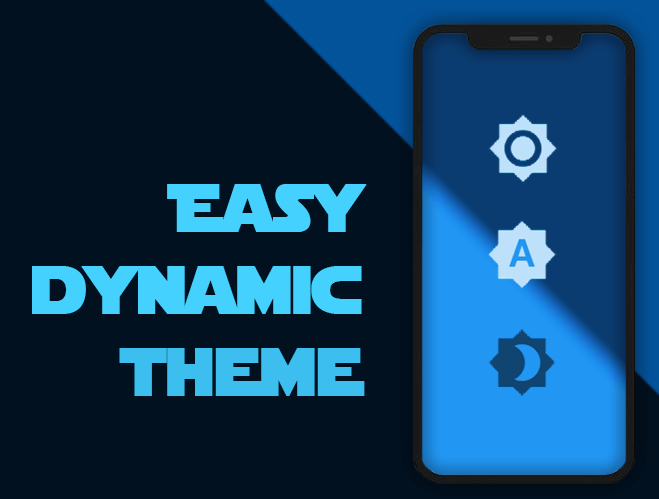
This is a new and easy approach on Flutter Themes.
Automatically get your OS defined Theme (Dynamic), force your prefered one (Light / Dark) and persist your choice in the device.
Pub Version
flutter tests
Codacy Badge
codecov
GitHub
BuyMeACoffee
Easy peasy, don't you think? ;)
https://github.com//rlazom/easy_dynamic_theme/blob/master/demo/easy_dynamic_theme.png?raw=true
Demo
https://github.com//rlazom/easy_dynamic_theme/blob/master/demo/widgets.gif?raw=true
Getting Started
For help getting started with Flutter, view our online documentation, which offers tutorials, samples, guidance on mobile development, and a full API reference.
Minimum Requirements
- Dart SDK: >=2.12.0 <3.0.0
- Flutter: >= 1.20.0
Installation and Usage
Once you're familiar with Flutter you may install this package adding easy_dynamic_theme to the dependencies list
of the pubspec.yaml file as follow:
dependencies:
  flutter:
    sdk: flutter
 easy_dynamic_theme: ^2.2.0
Then run the command flutter packages get on the console.
Examples of use
All magic occurs in your main.dart file
import 'package:flutter/material.dart';
import 'package:easy_dynamic_theme/easy_dynamic_theme.dart';
import 'home.dart';

void main() async {
  runApp(
    EasyDynamicThemeWidget(
      child: MyApp(),
    ),
  );
}

class MyApp extends StatelessWidget {
  final String title = 'EDT - Example';

  @override
  Widget build(BuildContext context) {
    return MaterialApp(
      title: title,
      theme: ThemeData.light(),
      darkTheme: ThemeData.dark(),
      themeMode: EasyDynamicTheme.of(context).themeMode,
      home: new MyHomePage(title: title,)
    );
  }
}
How to use predefined Themes
You can use your own themes as follows:
In the file themes.dart define your Themes
  import 'package:flutter/material.dart';

  var lightThemeData = new ThemeData(
      primaryColor: Colors.blue,
      textTheme: new TextTheme(button: TextStyle(color: Colors.white70)),
      brightness: Brightness.light,
      accentColor: Colors.blue);

  var darkThemeData = ThemeData(
      primaryColor: Colors.blue,
      textTheme: new TextTheme(button: TextStyle(color: Colors.black54)),
      brightness: Brightness.dark,
      accentColor: Colors.blue);
And then in your main.dart file import your themes file and use them on MaterialApp attributes theme and darkTheme
import 'package:flutter/material.dart';
import 'package:easy_dynamic_theme/easy_dynamic_theme.dart';
import 'theme.dart';
import 'home.dart';

void main() async {
  runApp(
    EasyDynamicThemeWidget(
      child: MyApp(),
    ),
  );
}

class MyApp extends StatelessWidget {
  final String title = 'EDT - Example';

  @override
  Widget build(BuildContext context) {
    return MaterialApp(
      title: title,
      theme: lightThemeData,
      darkTheme: darkThemeData,
      themeMode: EasyDynamicTheme.of(context).themeMode,
      home: new MyHomePage(title: title,)
    );
  }
}
How to change the ThemeMode in your app
You can use the function changeTheme from anywhere in your app.
This function have two optional parameters: dynamic and dark.
If the value of dynamic is true, it takes precedence over dark.
EasyDynamicTheme.of(context).changeTheme();
How to get your app current theme
Current app ThemeMode
ThemeMode themeMode = EasyDynamicTheme.of(context).themeMode;
The above example will return a value of the enum used by MaterialApp's ThemeMode with one of the following values:
system - Use either the light or dark theme based on what the user has selected in the system settings.
light - Always use the light mode regardless of system preference.
dark - Always use the dark mode (if available) regardless of system preference.
Current Context brightness
Brightness brightness = Theme.of(context).brightness;
Or if you want to know if your widget is dark mode based, you can achieve it with:
bool isDarkModeOn = Theme.of(context).brightness == Brightness.dark;
What about some out-of-the-box widgets?
Right now we have
- EasyDynamicThemeBtn, which is (kind of) a FlatButton that displays the icon according to the current theme of your app and allows you to switch between them.
- EasyDynamicThemeSwitch, which is a Switch widget, based on the current theme's brightness of your context and allows you to switch between light/dark them.
- EasyDynamicThemeAutoSwitch, which is a Switch widget, based on the current theme of your app and allows you to prioritize (or not) your OS defined brightness.

 v2.3.1