Buscar pacotes, repositórios e categorias de apps

Detalhes do pacotev0.1.3

aad_b2c_webview

Um pacote simples do Flutter que incorpora um WebView para acessar o ponto de extremidade do fluxo de usuário do Azure AD B2C.

Downloads em 30 dias
694
Curtidas
25
Pontos Pub
110

Instalar pacote

flutter pub add aad_b2c_webview

Visão geral do pacote

Orientação gerada a partir de informações públicas. Apenas para referência.

Um pacote Flutter que simplifica a integração com o Azure AD B2C ao incorporar uma visualização da web para acessar pontos de extremidade de fluxo de usuário. Permite fluxos de autenticação sem interrupções, como registro, login e redefinição de senha diretamente no aplicativo. Projetado para desenvolvedores que usam a plataforma de identidade da Microsoft, ele gerencia o renderização da interface do usuário das políticas B2C por meio de uma visualização da web nativa, reduzindo a necessidade de lógica de autenticação personalizada. O pacote é leve e focado em fornecer uma ponte direta entre aplicativos Flutter e os serviços do Azure AD B2C.

Casos de uso

  • Integrando fluxos de entrada do Azure AD B2C
  • Habilitar o registro de usuário por meio de políticas B2C
  • Apoiar fluxos de trabalho de redefinição de senha
  • Incorporando a IU B2C em aplicativos móveis
  • Gerenciando jornadas de autenticação personalizadas

Principais recursos

  • Integração simples de visualização da web
  • Acesso direto aos fluxos de usuário B2C
  • Configuração mínima necessária
  • Manuseio seguro de token
  • Criado para o ecossistema de identidade da Microsoft

Indicado para

  • Aplicativos Flutter usando o Azure AD B2C
  • Aplicativos móveis que precisam de autenticação segura
  • Desenvolvedores familiarizados com políticas B2C
  • Equipes construindo aplicativos de nível corporativo
  • Projetos que exigem código de autenticação personalizado mínimo

Considerações

  • Requer configuração válida do Azure AD B2C
  • Limitado a fluxos baseados em visualização da web
  • Nenhuma persistência de token embutida
  • Depende de URLs de política externas B2C
  • Não adequado para autenticação de interface do usuário nativa completa

README original

Snapshot do README original do repositório-fonte vinculado. Consulte o repositório para o conteúdo mais recente.

Azure AD B2C Embedded Webview

Azure AD B2C Embedded Webview is a very simple Flutter package that demonstrates how to use the embedded web view to sign in users with Azure AD B2C. Currently, using Flutter packages - appAuth and flutter_azure_b2c redirects to browser and doesn't provide in-app experience.

This package embeds the web view of the user flow endpoint using flutter_appview and redirects the user as per onRedirect callback method.

📚 Features

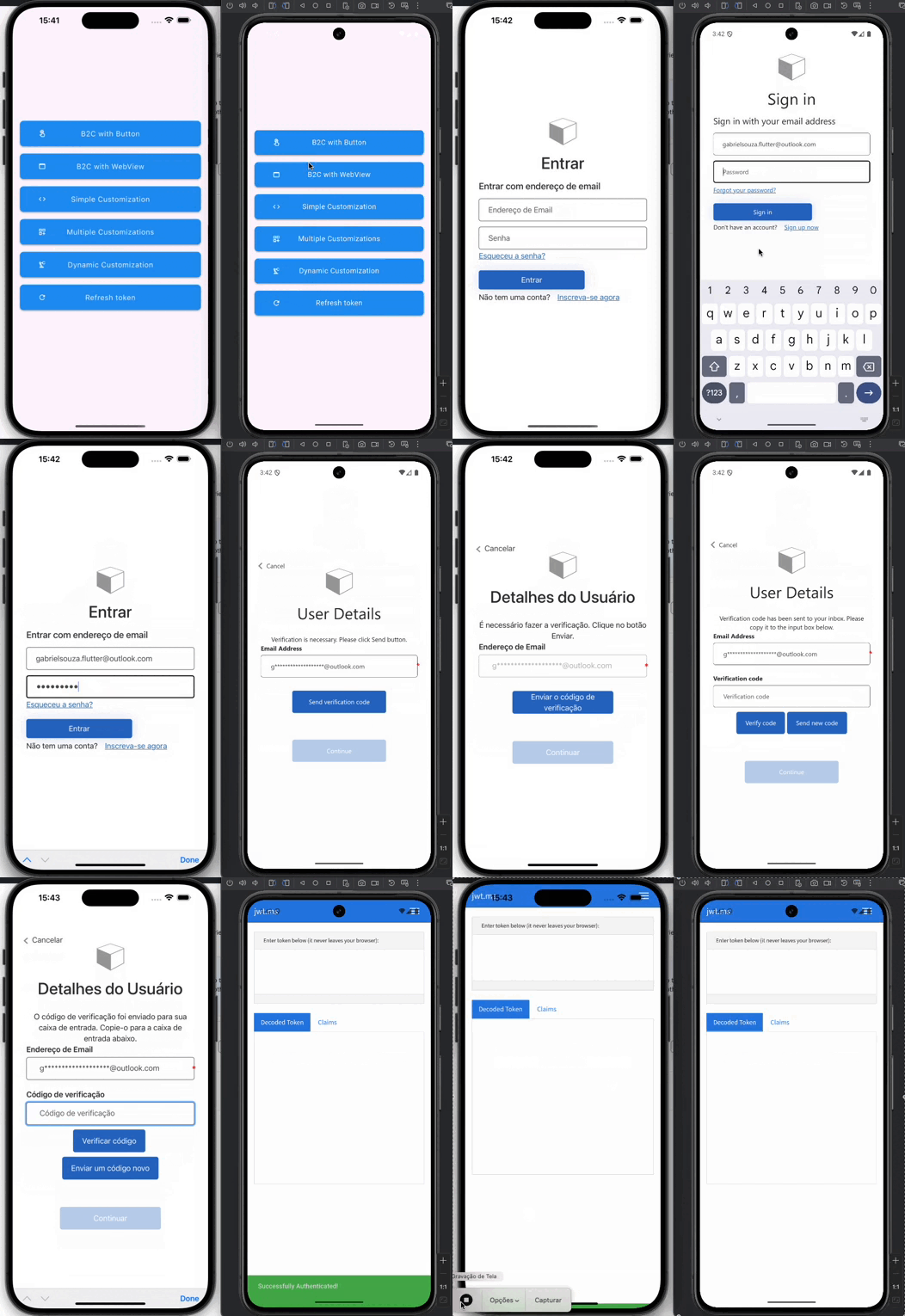
  • Login Button
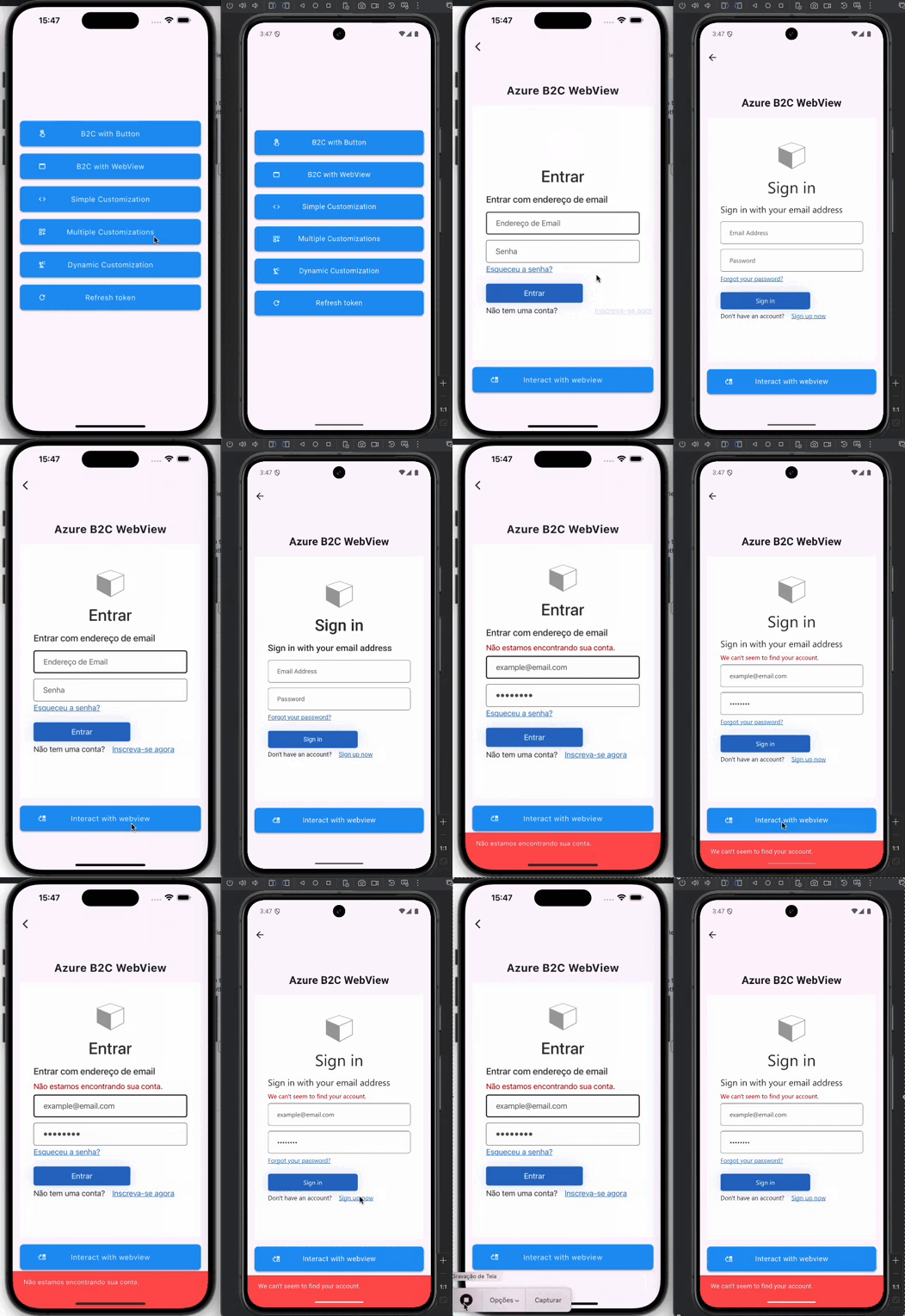
  • Webview Interaction
  • Flutter UI Customization
  • Dynamic Flutter Layout
  • Refresh Token

🚀 Getting started

To use the package in your Flutter app, add the following code to your main.dart file:

dependencies:
  aad_b2c_webview: <latest_version>

🛠️ Usage

Parameters

It is recommended to use env to save the keys securely

const aadB2CClientID = "<app-id>";
const aadB2CRedirectURL = "https://jwt.ms";
const aadB2CUserFlowName = "B2C_1_APPNAME_Signin";
const aadB2CScopes = ['openid', 'offline_access'];
const aadB2CTenantName = "<tenantName>";
const aadB2CUserAuthFlow = "https://$aadB2CTenantName.b2clogin.com/$aadB2CTenantName.onmicrosoft.com";
Where to find?
Configure parameters in the code
B2CWebViewParams params = B2CWebViewParams(
  responseType: Constants.defaultResponseType,
  tenantBaseUrl: aadB2CUserAuthFlow,
  clientId: aadB2CClientID,
  userFlowName: aadB2CUserFlowName,
  redirectUrl: aadB2CRedirectURL,
  scopes: aadB2CScopes,
  containsChallenge: true,
  isLoginFlow: true,
);
Send Optional Parameters

You have the flexibility to include optional parameters in order to customize the URL according to your specific requirements. The optionalParameters parameter allows you to pass a list of OptionalParam objects, where each object consists of a key and a value that represent the parameter name and its corresponding value, respectively.

Here's an example of how you can utilize the optionalParameters parameter to add new parameters to the URL:

optionalParameters: [
  OptionalParam(key: "parameter1", value: "value1"),
  OptionalParam(key: "parameter2", value: "value2"),
],

In the above example, we include two optional parameters: "parameter1" with the value "value1" and "parameter2" with the value "value2". You can include multiple OptionalParam objects within the list to incorporate multiple optional parameters in the URL.

These optional parameters provide you with the ability to customize the behavior of the URL and conveniently transmit additional information as per your needs.

Login Button

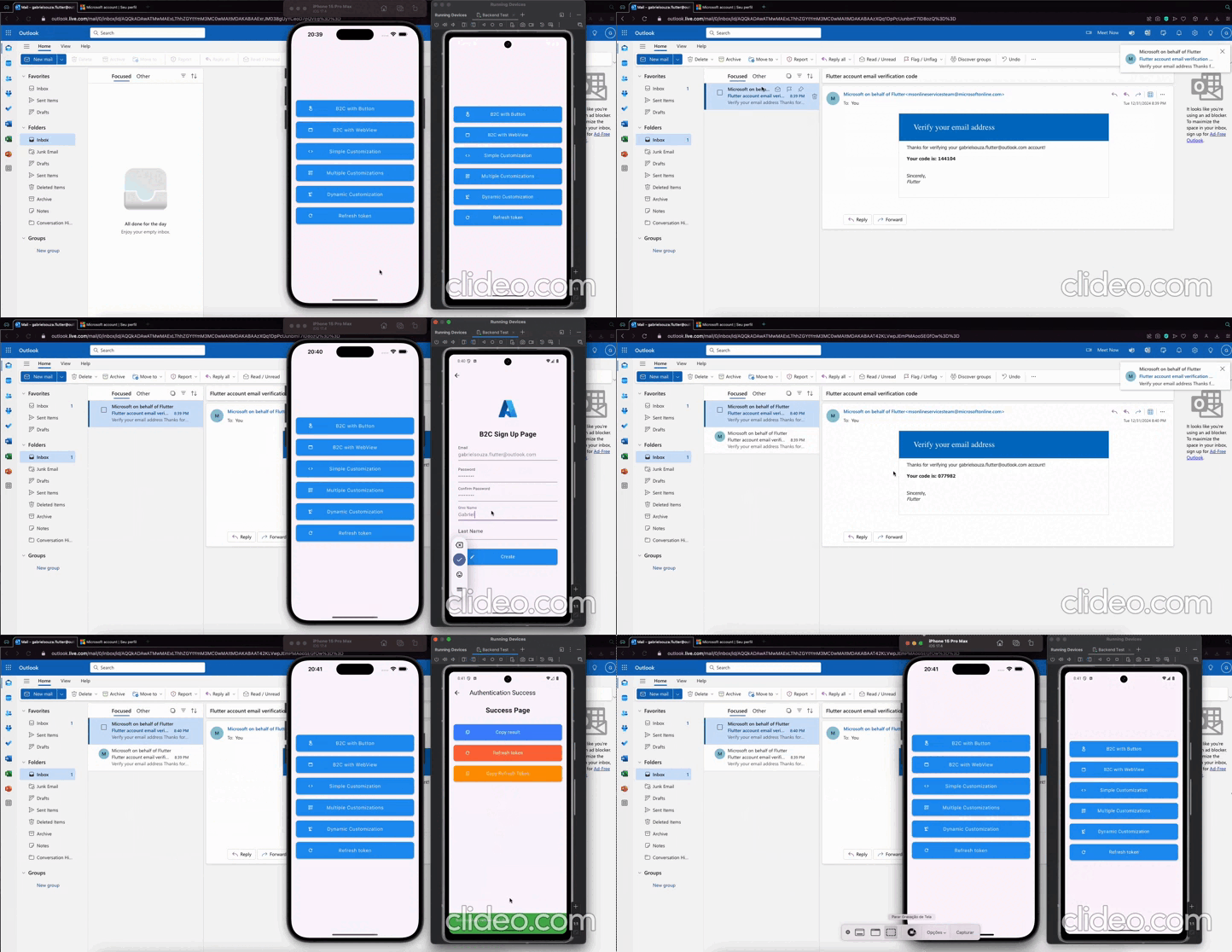
To add the easy to use sign in with microsoft button simply use the AADB2CBase.button widget and a beautiful sign in button appears as shown below.

Configuration

Add the following /android/app/src/main/AndroidManifest.xml inside the tags:

<meta-data android:name="flutter_deeplinking_enabled" android:value="true" />
<intent-filter android:autoVerify="true">
<action android:name="android.intent.action.VIEW" />
<category android:name="android.intent.category.DEFAULT" />
<category android:name="android.intent.category.BROWSABLE" />
<data android:scheme="https" android:host="myurl.com" />
</intent-filter>
  • Add it to the redirect URL in the Azure AD B2C project. If you prefer, you can change the redirect URL in our Flutter code to yours (change it in the Azure AD B2C portal too)
Example
import 'package:aad_b2c_webview/aad_b2c_webview.dart';
import 'package:flutter/material.dart';

class B2CWithButton extends StatelessWidget {
  final B2CWebViewParams params;
  const B2CWithButton({super.key, required this.params});

  @override
  Widget build(BuildContext context) {
    return Scaffold(
      appBar: AppBar(),
      body: SafeArea(
        child: Padding(
          padding: const EdgeInsets.all(16.0),
          child: Column(
            mainAxisAlignment: MainAxisAlignment.center,
            children: [
              const Text(
                'Azure B2C Button',
                style: TextStyle(
                  fontSize: 24.0,
                  fontWeight: FontWeight.bold,
                ),
              ),
              const SizedBox(height: 16.0),
              AADB2CBase.button(
                params: params,
                settings: ButtonSettingsEntity(
                  onError: _onError,
                  onSuccess: _onSuccess,
                  onKeepLoading: _onKeepLoading,
                ),
              ),
            ],
          ),
        ),
      ),
    );
  }

  _onSuccess(
      BuildContext context,
      accessToken,
      idToken,
      refreshToken,
      ) {
    var snackBar = const SnackBar(
      content: Text('Successfully Authenticated!'),
      backgroundColor: Colors.green,
    );
    ScaffoldMessenger.of(context).showSnackBar(snackBar);
  }

  _onError(BuildContext context, String? error) {
    var snackBar = SnackBar(
      content: Text(error ?? ''),
      backgroundColor: Colors.redAccent,
    );
    ScaffoldMessenger.of(context).showSnackBar(snackBar);
  }

  bool _onKeepLoading(String? url) =>
      url?.startsWith(params.redirectUrl) ?? false;
}

Click here to access the full example

Webview Interaction

Custom build sign in button to call web view page

Example
import 'dart:developer';
import 'package:aad_b2c_webview/aad_b2c_webview.dart';
import 'package:flutter/foundation.dart';
import 'package:flutter/material.dart';
import 'widgets/button_widget.dart';

class B2CWithWebView extends StatefulWidget {
  final B2CWebViewParams params;
  const B2CWithWebView({super.key, required this.params});

  @override
  State<B2CWithWebView> createState() => _B2CWithWebViewState();
}

class _B2CWithWebViewState extends State<B2CWithWebView> {
  ActionController? _controller;

  @override
  Widget build(BuildContext context) {
    return Scaffold(
      appBar: AppBar(),
      resizeToAvoidBottomInset: false,
      body: SafeArea(
        child: Padding(
          padding: const EdgeInsets.symmetric(horizontal: 16.0),
          child: Column(
            mainAxisAlignment: MainAxisAlignment.center,
            children: [
              const Center(
                child: Text(
                  'Azure B2C WebView',
                  style: TextStyle(
                    fontSize: 24.0,
                    fontWeight: FontWeight.bold,
                  ),
                ),
              ),
              const SizedBox(height: 16.0),
              SizedBox(
                height: MediaQuery.sizeOf(context).height * 0.6,
                width: MediaQuery.sizeOf(context).width,
                child: AADB2CBase.webview(
                  params: widget.params,
                  settings: WebViewSettingsEntity(
                    onError: _onError,
                    onSuccess: _onSuccess,
                    controllerBuilder: (
                      BuildContext context,
                      ActionController action,
                    ) => _controller = action,
                  ),
                ),
              ),
              const SizedBox(height: 16.0),
              ButtonWidget(
                onTap: () async {
                  try {
                    await _controller?.insertAndClick(
                      listIdValue: [
                        ActionEntity(id: 'email', value: 'example@email.com'),
                        ActionEntity(id: 'password', value: '12345678'),
                      ],
                      buttonId: 'next',
                    );
                  } catch (error, trace) {
                    if (kDebugMode) log('Error: $error', stackTrace: trace);
                  }
                },
                title: 'Interact with webview',
                icon: Icons.move_up_outlined,
              ),
            ],
          ),
        ),
      ),
    );
  }

  _onSuccess(
    BuildContext context,
    accessToken,
    idToken,
    refreshToken,
  ) {
    var snackBar = const SnackBar(
      content: Text('Successfully Authenticated!'),
      backgroundColor: Colors.green,
    );
    ScaffoldMessenger.of(context).showSnackBar(snackBar);
  }

  _onError(BuildContext context, String? error) {
    var snackBar = SnackBar(
      content: Text(error ?? ''),
      backgroundColor: Colors.redAccent,
    );
    ScaffoldMessenger.of(context).showSnackBar(snackBar);
  }
}

Click here to access the full example

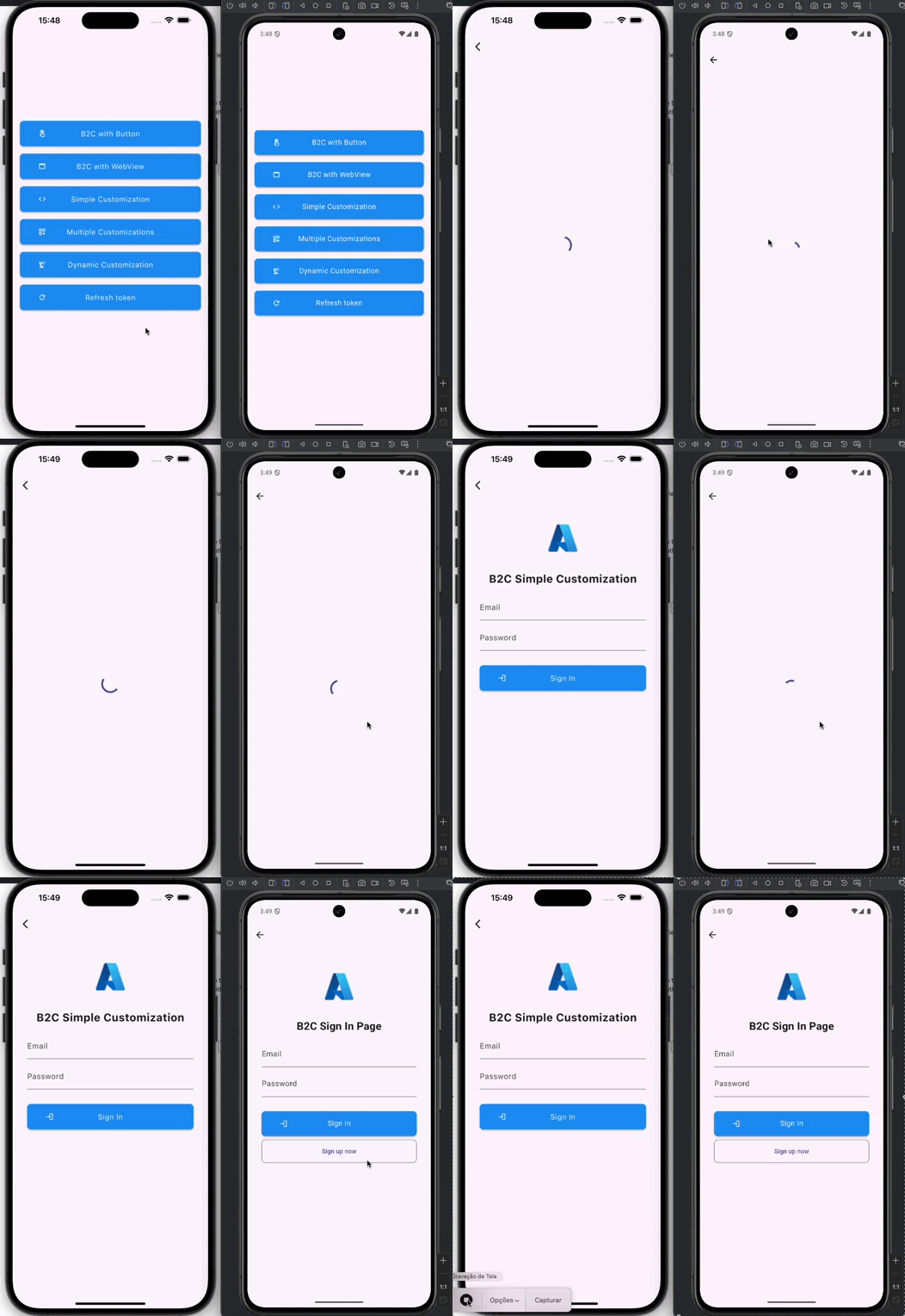
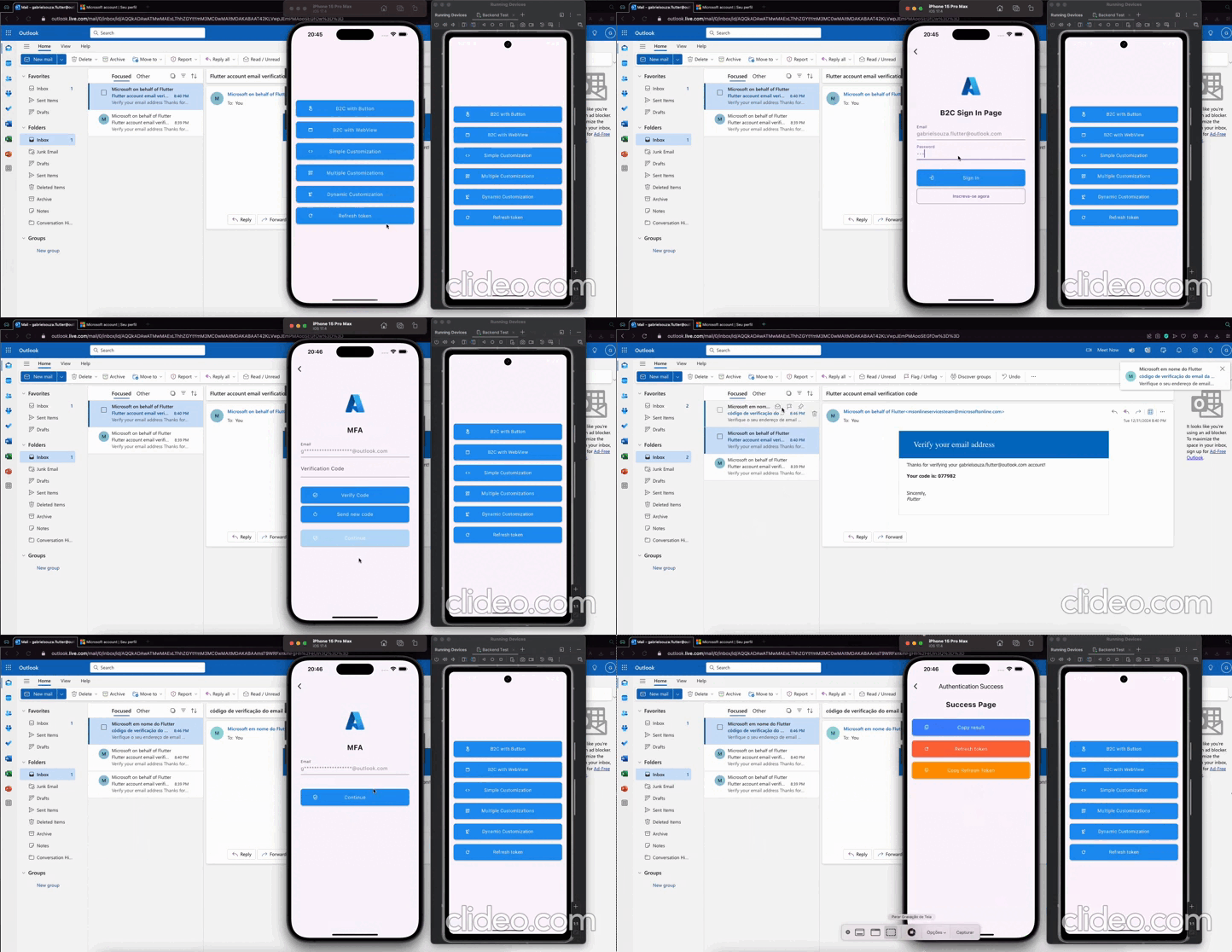
Flutter UI Customization

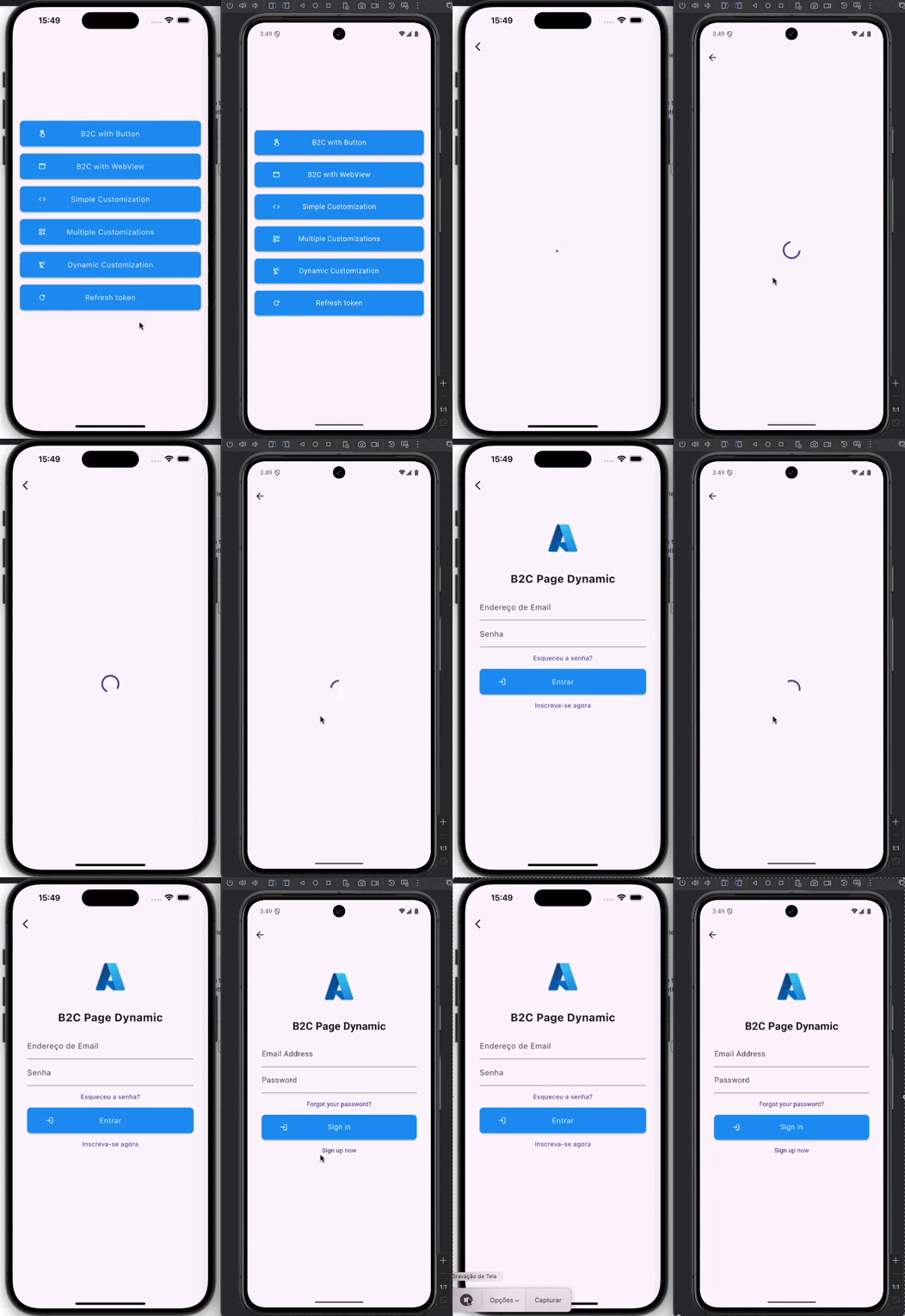
Get all the power of Flutter/Dart to customize the layout of Azure authentication screens

Sign In

Sign Up & Sign In & MFA

Full Examples

Dynamic Flutter Layout

Convert layout to flutter automatically

Example
import 'package:aad_b2c_webview/aad_b2c_webview.dart';
import 'package:example/core/commons.dart';
import 'package:flutter/material.dart';
import 'widgets/button_widget.dart';

class B2CWithDynamicCustomization extends StatefulWidget {
  final B2CWebViewParams params;
  const B2CWithDynamicCustomization({super.key, required this.params});

  @override
  State<B2CWithDynamicCustomization> createState() =>
      _B2CWithDynamicCustomizationState();
}

class _B2CWithDynamicCustomizationState
    extends State<B2CWithDynamicCustomization> {
  @override
  Widget build(BuildContext context) {
    return Scaffold(
      appBar: AppBar(),
      body: Scaffold(
        body: AADB2CBase.custom(
          params: widget.params,
          settings: CustomSettingsEntity(
            onError: (BuildContext context, String? error) {
              setState(() => _isLoading = false);
              var snackBar = SnackBar(
                content: Text(error ?? ''),
                backgroundColor: Colors.redAccent,
              );
              ScaffoldMessenger.of(context).showSnackBar(snackBar);
            },
            onSuccess: (context, accessToken, idToken, refreshToken) async {
              setState(() => _isLoading = false);
              var snackBar = const SnackBar(
                content: Text('Successfully Authenticated!'),
                backgroundColor: Colors.green,
              );
              ScaffoldMessenger.of(context).showSnackBar(snackBar);
            },
            pageBuilder: (_, __, controller, List<HtmlParseEntity>? htmlItems) {
              return Padding(
                padding: const EdgeInsets.all(32.0),
                child: Form(
                  key: _formKey,
                  child: CustomScrollView(
                    slivers: [
                      defaultImage(),
                      buildTitle('B2C Page Dynamic'),
                      SliverList.builder(
                        itemCount: htmlItems?.length ?? 0,
                        itemBuilder: (BuildContext context, int index) {
                          final item = htmlItems?[index];
                          if (item?.type == null) return const SizedBox();
                          return switch (item!.type) {
                            HtmlParseType.input => _inputBuilder(item),
                            HtmlParseType.button => _button(
                                controller,
                                item,
                                false,
                              ),
                            HtmlParseType.a => _button(
                                controller,
                                item,
                                true,
                              ),
                            HtmlParseType.none => const SizedBox(),
                          };
                        },
                      ),
                    ],
                  ),
                ),
              );
            },
          ),
        ),
      ),
    );
  }

  bool _isLoading = false;
  final GlobalKey<FormState> _formKey = GlobalKey<FormState>();
  final TextEditingController _emailController = TextEditingController();
  final TextEditingController _passwordController = TextEditingController();

  Widget _inputBuilder(HtmlParseEntity params) {
    return TextFormField(
      controller: TextEditingController(),
      enabled: !_isLoading,
      decoration: InputDecoration(
        labelText: params.name,
      ),
      keyboardType: TextInputType.text,
    );
  }

  Widget _button(
    ActionController controller,
    HtmlParseEntity params,
    bool isLink,
  ) {
    onTap() async {
      if (_formKey.currentState?.validate() ?? false) {
        setState(() => _isLoading = true);
        String email = _emailController.text.trim();
        String password = _passwordController.text.trim();
        await controller.insertAndClick(
          listIdValue: [
            ActionEntity(id: 'email', value: email),
            ActionEntity(id: 'password', value: password),
          ],
          buttonId: 'next',
        );
      }
    }

    if (_isLoading) return _buildLoading();
    if (isLink) {
      return TextButton(
        onPressed: onTap,
        child: Text(
          params.textContent,
          style: const TextStyle(
            decorationStyle: TextDecorationStyle.solid,
          ),
        ),
      );
    }
    return ButtonWidget(
      title: params.textContent,
      icon: Icons.login_outlined,
      onTap: onTap,
    );
  }

  Widget _buildLoading() {
    return const Column(
      mainAxisAlignment: MainAxisAlignment.center,
      crossAxisAlignment: CrossAxisAlignment.center,
      children: [
        CircularProgressIndicator(),
      ],
    );
  }
}

Click here to access the full example

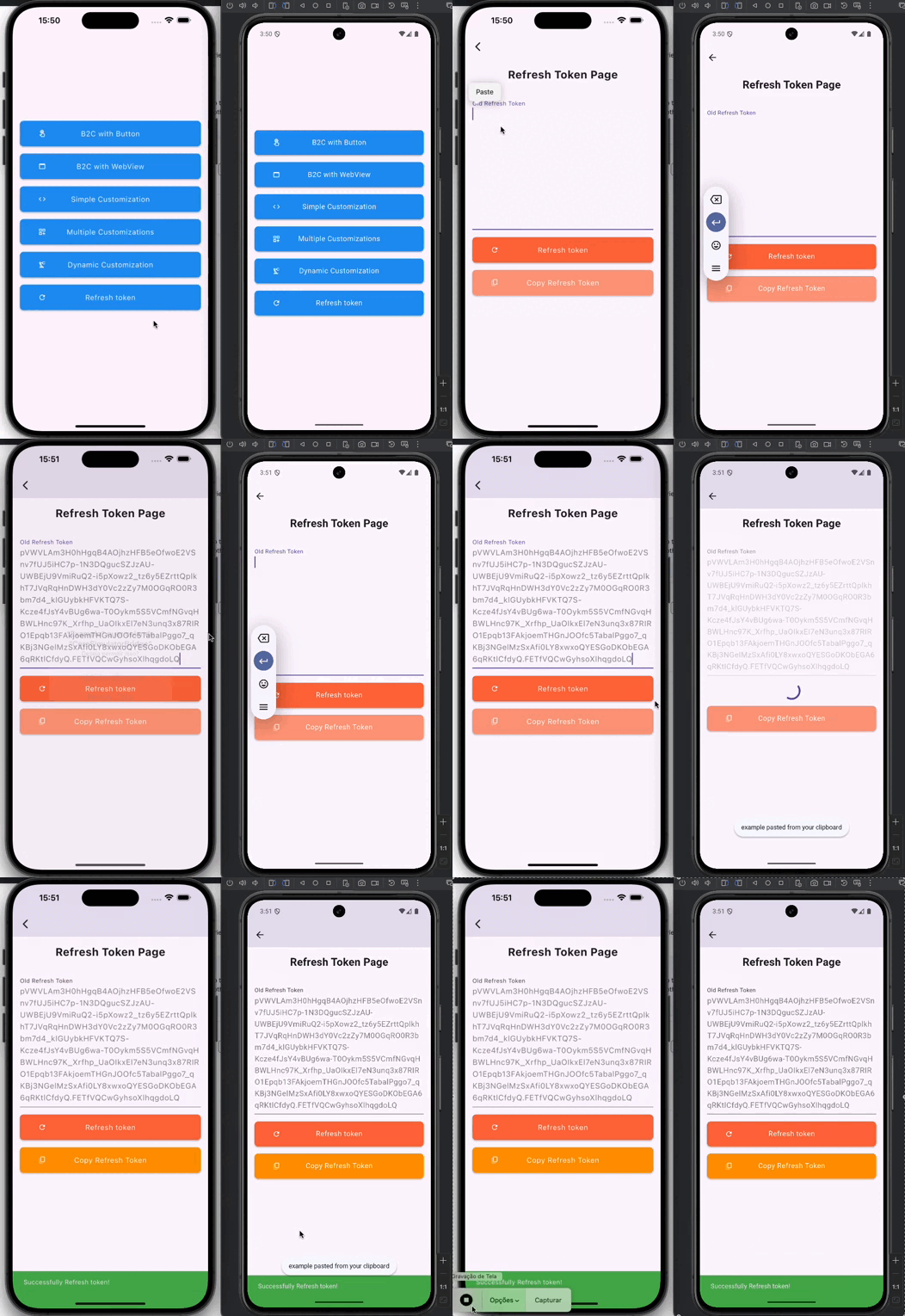
Refresh Token

Use the code below to refresh the token

Example
await controller.refreshToken(
  B2CAuthEntity(
    refreshToken: _refreshTokenController.text.trim(),
    userFlowName: aadB2CUserFlowName,
    tenantBaseUrl: aadB2CUserAuthFlow,
    clientId: aadB2CClientID,
  ),
);

Click here to access the full example

Categorias

Dependências

Lista de dependências 7 itens

  • get_it^7.7.0
  • http^1.2.2
  • pkce^1.1.0+1
  • webview_flutter^4.10.0
  • webview_flutter_android^4.2.0
  • webview_flutter_platform_interface^2.10.0
  • webview_flutter_wkwebview^3.18.4

Repositório-fonte

Projetos que usam este pacote

Ainda não há dados.