搜尋套件、儲存庫與 APP 分類

flutter_physics 封面
套件詳情v0.2.3

flutter_physics

一個Flutter套件,提供基於物理的動畫,包含可自訂的彈簧與重力模擬,可同時用作物理模擬與動畫曲線。

AndroidiOSWebmacOSWindowsLinux
近 30 天下載
4470
喜歡數
64
Pub 分數
160

安裝套件

flutter pub add flutter_physics

套件介紹

根據套件公開資料產生的選型評估,僅供參考。

flutter_physics 是一個 Flutter 套件,可實現基於物理的動畫,支援自訂彈簧與重力模擬。它讓開發者能透過利用質量、剛度與阻尼等物理原理,創造出真實的運動效果。此套件既可用作模擬引擎,也可作為動畫曲線來源,為 UI 元素提供順暢自然的過渡效果。適用於拖曳組件、彈跳效果或動態版面等互動元件,支援所有主要平台,包括 Android、iOS、Web、macOS、Windows 與 Linux。

適用情境

  • 互動式拖放介面
  • 彈跳或彈性使用者介面元素
  • 動態佈局過渡
  • 在應用程式中模擬現實世界的物理
  • 創建流暢的滾動效果

主要特色

  • 可自訂的彈簧動力學
  • 基於重力的運動模擬
  • 對動畫曲線的支援
  • 跨平台相容性
  • 即時物理更新
  • 可設定的質量、剛度與阻尼

適合對象

  • 開發互動式 UI 的開發者
  • 需要自然運動效果的應用
  • 需要物理真實感的動畫
  • 跨平台行動與網頁應用程式
  • 強調流暢性的設計系統

使用建議

  • 需要理解物理參數
  • 可能影響複雜模擬的效能
  • 不適合簡單的線性動畫
  • 需要仔細調整以獲得所需行為
  • 除了基本範例之外,文件內容有限

原始 README

以下為關聯原始碼儲存庫的 README 原文快照,最新內容請造訪原始碼儲存庫。

Flutter Physics

Physics-based animation primitives for Flutter, with drop-in replacements for Flutter's animation controllers and implicitly animated widgets. Unify curves and physics in one powerful system!

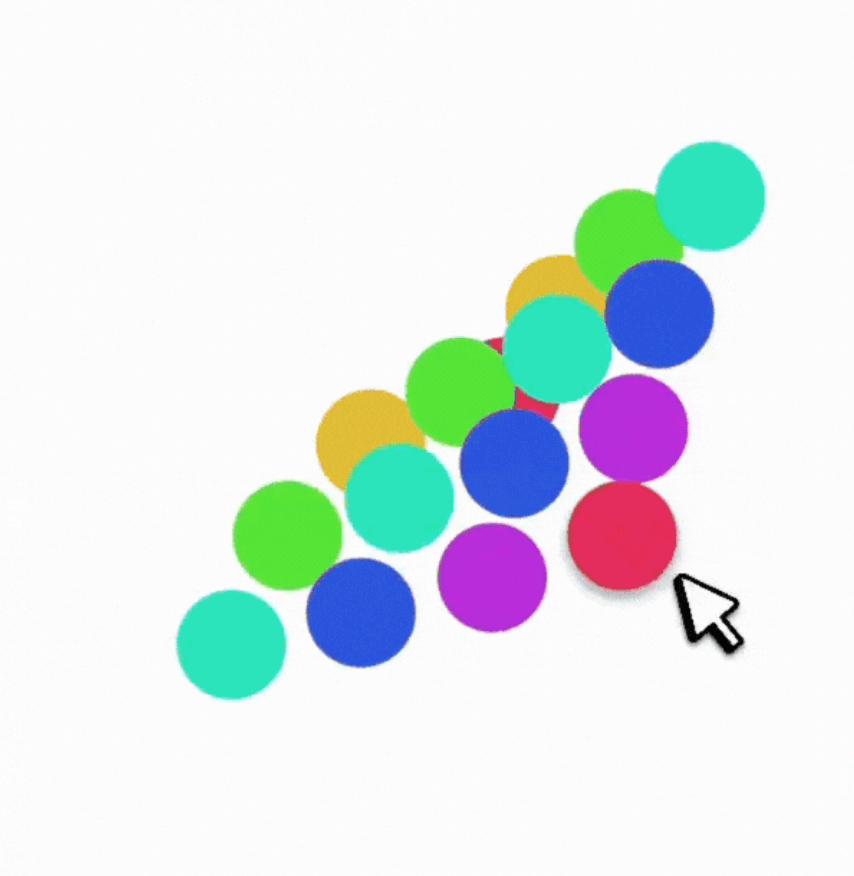
Physics Grid Demo

A springy grid of cells that:

  • Can be dragged around with Spring physics
  • Smoothly reacts to being "grabbed" mid-flight

AnimatedContainer vs. AContainer Observe how the physics-based AContainer's velocity is preserved when the container is resized mid-flight, while the standard AnimatedContainer results in a sudden jump in velocity.


Table of Contents

  1. Overview
  2. Installation
  3. Core Concepts
    1. Physics vs. Curves
    2. PhysicsSimulation = Simulation + Curve
    3. Implementing Your Own Physics
  4. Controllers
    1. PhysicsController (1D)
    2. PhysicsController2D (2D)
    3. PhysicsControllerMulti (Multi-Dimensional)
  5. Implicitly Physics Animated Widgets
    1. Physics-Animated Properties vs Tween-Animated Properties
    2. AContainer, APadding, AAlign, etc.
    3. ASize & ASwitcher
    4. AValue — Automatic Value Animation
    5. Gesture-Driven Animations
  6. PhysicsBuilder & PhysicsBuilder2D & PhysicsBuilderMulti
  7. Roll Your Own ImplicitlyPhysicsAnimatedWidget
  8. Custom Flutter Logo
  9. Side-by-Side Examples
  10. FAQ & Limitations

Overview

flutter_physics extends Flutter’s animation system with physics-based motion. It seamlessly merges curves (e.g. Curves.easeInOut) and dynamic simulations (e.g. Spring, Gravity) under a single type called Physics.(*) This means you can freely swap a spring simulation for a standard curve, without changing your widget structure or controller logic.

You’ll find:

  • 🎮 PhysicsController: A drop-in replacement for AnimationController that supports both curves and physics.
  • 🎨 ImplicitlyPhysicsAnimatedWidget and friends: Physics-based versions of Flutter's implicitly animated widgets (AContainer, APadding, ASize, ASwitcher, etc.).
  • 🏗️ PhysicsBuilder and PhysicsBuilder2D: Builder widgets for single or 2D animations with physics.
  • 🚀 Better velocity management: Physics simulations can preserve velocity on target changes, enabling fluid gesture-based UIs.
  • ⚡ Unified animations: Use standard duration for curve-based motion or let the physics simulation drive the timing automatically.

(*) Note: Physics is just an alias for Curve — but the PhysicsSimulation class implements both Curve and Simulation.


Installation

Add flutter_physics to your pubspec.yaml:

dependencies:
  flutter_physics: ^latest

Then run:

flutter pub get --no-example

And import it:

import 'package:flutter_physics/flutter_physics.dart';

Core Concepts

Physics vs. Curves

In traditional Flutter animations, you typically define a Curve (e.g., Curves.easeOut) and rely on a 0→1 tween. Physics animations replace or supplement that approach by calculating the object’s position over time based on forces like springs, gravity, or friction.

But in this library, Physics can be either a Curve or a PhysicsSimulation. Yes, that means you can do:

physics: Curves.easeInOut

or:

physics: Spring.elegant

…with no other code changes!


PhysicsSimulation = Simulation + Curve

Every built-in physics (e.g. Spring, Gravity) implements both:

This lets them plug into Flutter’s animation system as if they were just curves, while still offering dynamic velocity and “natural” motion.

Example code snippet that looks identical for both scenarios:

// PhysicsController
controller.animateTo(
  100.0, 
  physics: Spring.elegant, // or Curves.easeInOut
);

Implementing Your Own Physics

To roll your own simulation, extend PhysicsSimulation:

class MyWackyPhysics extends PhysicsSimulation {
  MyWackyPhysics() : super(start: 0, end: 100, initialVelocity: 10);

  @override
  double get duration {
    /* Solve for duration in seconds */
  }

  @override
  double x(double time) => /* compute position at time (in seconds) */;
  
  @override
  double dx(double time) => /* compute velocity at time (in seconds) */;

  @override
  bool isDone(double time) => /* return true if we've settled */;

  @override
  PhysicsSimulation copyWith({/* updated fields */}) {
    // Return new instance with updated fields
  }

  @override
  double solveInitialVelocity(double start, double end, double durationInSeconds) {
    // Recast the start-end in time
  }
}

You can now use your custom physics in PhysicsController or implicitly in AValue, AContainer, etc., just like a curve.


Controllers

PhysicsController (1D)

Drop-in replacement for AnimationController, but supports physics-based animations:

final _controller = PhysicsController(
  vsync: this,
  defaultPhysics: Spring.withDamping(
    mass: 1.0,
    dampingFraction: 0.8,
  ),
);

void _moveToEnd() {
  // No duration needed if using a physics simulation:
  _controller.animateTo(
    1.0,
    velocityDelta: 500.0, // add some velocity from a gesture
  );
}

Interruptions preserve velocity automatically:

_controller.animateTo(1.0);
// Halfway through, change target:
_controller.animateTo(0.2); // continues with momentum

PhysicsController2D (2D)

For two-dimensional motion (Offset), e.g., dragging a card around:

final _controller2D = PhysicsController2D.unbounded(
  vsync: this,
  defaultPhysics: Simulation2D(
    Spring.elegant, // X-axis
    Spring.elegant, // Y-axis
  ),
);

You get Offset value, velocity preservation, and animateTo(Offset). Perfect for freeform drag & fling:

void _onPanUpdate(DragUpdateDetails details) {
  final newOffset = _controller2D.value + details.delta;
  _controller2D.animateTo(newOffset);
}

PhysicsControllerMulti (Multi-Dimensional)

If you need N-dimensional motion (like 3D transforms, or more), use PhysicsControllerMulti. It handles arrays of doubles. It’s conceptually the same but scales to an arbitrary number of dimensions.


Implicitly Physics Animated Widgets

We provide physics-based alternatives to all of Flutter’s ImplicitlyAnimatedWidgets, collectively under ImplicitlyPhysicsAnimatedWidget. They animate changes in layout properties using either a curve or a physics simulation, without requiring you to manage a controller yourself.

Examples include:

  • AContainer (vs AnimatedContainer)
  • APadding (vs AnimatedPadding)
  • AAlign (vs AnimatedAlign)
  • AScale, ARotation, AOpacity, APositioned, etc.

Physics-Animated Properties vs Tween-Animated Properties

In standard implicitly animated widgets, you specify a duration and a curve. Whenever a property changes, the widget re-runs the animation from 0 to 1 via a "Tween" animation.

This approach has some limitations:

  1. Fixed Duration: The animation always takes exactly the specified duration, even if interrupted mid-way. This results in discontinuities when a value is changed successively.
  2. No Velocity Preservation: Each change restarts from 0, losing any momentum from previous animations. This makes interactive animations feel less fluid.
  3. 0→1 Constraint: Tweens must map everything to a 0→1 range, which can be unintuitive for properties like position or scale that have natural units. For example, a Tween<double> from 1 to 3 and another from 3 to 100 are treated as having the same length by the animation system.
  4. Curve Limitations: Standard curves can't react dynamically to changes or preserve physical properties like momentum and elasticity.

With a physics-based approach, you achieve dynamic, continuous motion, velocity preservation, and physics-driven timing.

With ImplicitlyPhysicsAnimatedWidget, you can specify either:

duration: Duration(milliseconds: 300), 
physics: Curves.easeOut

or let a simulation drive timing:

// No fixed duration needed
physics: Spring.swift

In cases where you need exact duration still, you can provide a duration parameter just like with a curve.

physics: Spring.swift,
duration: Duration(milliseconds: 300)

When the property changes, the widget re-runs the simulation from its current velocity, resulting in a fluid, interruptible motion.


AContainer, APadding, AAlign, etc.

All mimic the same API as their Flutter counterparts but with a physics property instead of a curve property. For example:

AContainer(
  width: 200,
  height: 200,
  color: Colors.red,
  physics: Spring.elegant,
  child: Text('Physics!'),
)

When you change width/height, it automatically animates with the specified spring.


Tweens are still supported

Certain properties (like BoxDecoration, Maxtrix4) are best handled with Tween internally.


ASize & ASwitcher

ASize is like AnimatedSize but:

  • Supports curves or physics
  • Maintains velocity if child resizes mid-animation
  • Doesn’t force a 0→1 tween

ASwitcher is like AnimatedSwitcher with physics. It can fade/scale new children in/out using real spring or friction:

ASwitcher(
  physics: Spring.buoyant,
  transitionBuilder: (child, animation) => FadeTransition(
    opacity: animation,
    child: child,
  ),
  child: showFirst ? _buildFirstChild() : _buildSecondChild(),
);

AValue — Automatic Value Animation

AValue<T> automatically animates between values of any type T, be it double, Color, Offset, or your own custom object (by providing normalize and denormalize):

AValue.color(
  value: _currentColor,
  physics: Curves.easeOut, // or Spring.gentle, Gravity.earth, etc.
  builder: (context, color, child) => Container(
    color: color,
    width: 100, 
    height: 100,
  ),
);

Whenever _currentColor changes, it animates smoothly with your chosen physics or curve.

Here's a more practical example using a custom type to animate a progress indicator with additional metadata:

// Define a custom progress type
class ProgressState {
  const ProgressState({
    required this.progress,
    required this.label,
    required this.color,
  });

  final double progress;
  final String label;
  final Color color;
}

// Use it in your widget
AValue<ProgressState>(
  value: ProgressState(
    progress: 0.7,
    label: 'Uploading...',
    color: Colors.blue,
  ),
  // We'll animate progress and color (5 values: 1 for progress, 4 for RGBA)
  normalizeOutputLength: 5,
  // Convert to animatable values
  normalize: (state) => [
    state.progress,
    ...AValue.normalizeColor(state.color),
  ],
  // Convert back to our type
  denormalize: (values) => ProgressState(
    progress: values[0],
    label: value.label, // Label changes instantly
    color: AValue.denormalizeColor(values.sublist(1)),
  ),
  physics: Spring.gentle,
  builder: (context, state, child) => Column(
    children: [
      LinearProgressIndicator(
      value: state.progress,
      color: state.color,
      ),
      Text(state.label),
    ],
  ),
)

Gesture-Driven Animations

Because physics naturally handles velocity, these widgets are perfect for gestures. Imagine a springy ball following the pointer:

class SpringyBall extends StatefulWidget {
  const SpringyBall({super.key});
  @override
  State<SpringyBall> createState() => _SpringyBallState();
}

class _SpringyBallState extends State<SpringyBall> {
  Offset _target = Offset.zero;
  Offset _velocity = Offset.zero;

  @override
  Widget build(BuildContext context) {
    return GestureDetector(
      onPanUpdate: (details) => setState(() {
        _target += details.delta;
        _velocity = details.velocity;
      }),
      child: PhysicsBuilder2D(
        // Animate to pointer position
        value: _target,
        // Add velocity from gesture
        velocityDelta: _velocity,
        physics: Spring.swift,
        builder: (context, offset, child) {
          return Stack(
            clipBehavior: Clip.none,
            children: [
              Positioned(
                left: offset.dx,
                top: offset.dy,
                child: Container(
                  width: 50,
                  height: 50,
                  decoration: BoxDecoration(
                    color: Colors.blue,
                    shape: BoxShape.circle,
                  ),
                ),
              ),
            ],
          );
        },
      ),
    );
  }
}

Every onPanUpdate sets a new target, and the spring-based builder moves there with velocity-based motion.


PhysicsBuilder & PhysicsBuilder2D & PhysicsBuilderMulti

If you want to animate a single scalar (double) or an Offset with physics (similar to a “manual AnimatedBuilder”), use these:

PhysicsBuilder(
  value: _sliderValue,
  physics: Spring.snap,
  onValueChanged: (val) => print('val is $val'),
  builder: (context, animatedVal, child) {
    return Slider(
      value: animatedVal,
      onChanged: (newVal) {
        setState(() => _sliderValue = newVal);
      },
    );
  },
);
  • PhysicsBuilder2D is the same concept for Offset (X/Y).
  • PhysicsBuilderMulti is the same concept for List<double> (N-dimensional).

Roll Your Own ImplicitlyPhysicsAnimatedWidget

If the built-in AContainer, AAlign, APadding, etc. aren’t enough, you can implement your own:

  1. Extend ImplicitlyPhysicsAnimatedWidget.
  2. Override createState() to return a subclass of PhysicsAnimatedWidgetBaseState.
  3. In forEachTween / forEachPhysicsProperty, define what’s animatable.

Here's the implementation of ASizedBox in the package:

class ASizedBox extends ImplicitlyPhysicsAnimatedWidget {
  const ASizedBox({
    super.key,
    this.width,
    this.height,
    super.duration,
    super.physics,
    super.onEnd,
    this.child,
  });

  final double? width;
  final double? height;
  final Widget? child;

  @override
  State<ASizedBox> createState() => _ASizedBoxState();
}

class _ASizedBoxState extends PhysicsAnimatedWidgetBaseState<ASizedBox> {
  PhysicsAnimatedProperty? _width, _height;

  @override
  void forEachPhysicsProperty(PhysicsPropertyVisitor visitor) {
    _width = visitor(_width, widget.width,
        (v) => PhysicsAnimatedProperty(key: 'width', initialValue: v));
    _height = visitor(_height, widget.height,
        (v) => PhysicsAnimatedProperty(key: 'height', initialValue: v));
  }

  @override
  List<String> get physicsAnimatedProperties => const ['width', 'height'];

  @override
  Widget build(BuildContext context) {
    return SizedBox(
      width: evaluate(_width),
      height: evaluate(_height),
      child: widget.child,
    );
  }
}

Then use it with:

ASizedBox(width: 200, height: 200, physics: Gravity());

Custom Flutter Logo

We even have a physics-based Flutter logo—FlutterPhysicsLogo—that animates size and style changes with real spring or curve:

FlutterPhysicsLogo(
  size: 96,
  style: FlutterLogoStyle.horizontal,
  physics: Spring.buoyant, // or Curves.easeIn
  duration: const Duration(milliseconds: 700),
)

FAQ & Limitations

  1. How do I ensure a fixed duration with a physics-based widget?
    Provide a duration if you’re using a curve. If you explicitly want a spring to finish in X seconds, you can set up a custom spring or use the copyWith(duration: ...) approach.

  2. Velocity handling
    By default, if you set a new target mid-animation, physics-based animations keep going with their prior velocity. If that’s not desired, you can pass velocityOverride: 0.0 in animateTo() calls.

  3. Performance
    For most use cases, it’s about the same as the standard animation system (the library piggybacks on the same Ticker logic). As is the case with any animation system, over-animating a huge number of items could degrade performance, so measure carefully.


Thanks for Checking Out flutter_physics!

We hope flutter_physics helps you build delightful, natural-feeling UIs with minimal boilerplate. Physics or curves? You don’t have to choose—this library merges them in one easy place.

Happy animating!


Enjoy building physically reactive Flutter apps!
Send me PRs, issues, and more demos if you come up with interesting new physics or widget patterns!

所屬分類

原始碼儲存庫

使用此套件的專案

暫無相關資料。