Orientação gerada a partir de informações públicas. Apenas para referência.
LuaDardo é uma máquina virtual Lua 5.3 implementada em Dart, permitindo a integração fluida de scripts Lua em aplicações Dart. Permite que desenvolvedores executem código Lua diretamente no Flutter e em outros ambientes Dart em múltiplas plataformas. O pacote fornece uma solução leve e embutível para scripts, ideal para estender logicamente a aplicação dinamicamente. Com suporte completo para Android, iOS, macOS, Windows e Linux, o LuaDardo oferece consistência e desempenho entre plataformas. Seu design enfatiza compatibilidade com o padrão Lua 5.3, garantindo comportamento confiável para scripts escritos em Lua.
Casos de uso
Incorporando scripts Lua em aplicativos Flutter
Scripting de lógica de jogo dinâmico
Sistemas de configuração extensíveis
Avaliação de código em tempo de execução
Arquitetura baseada em plug-ins
Principais recursos
Compatibilidade com Lua 5.3
Suporte multiplataforma
Máquina virtual leve
integração nativa do Dart
Execução de script a partir de strings ou arquivos
Indicado para
Desenvolvedores Flutter que precisam de script
Desenvolvimento de jogos com comportamento dinâmico
Aplicações que exigem extensibilidade de plug-in
Ferramentas que precisam de script embutido
Considerações
Requer conhecimento sobre a sintaxe do Lua
Limitado a recursos do Lua 5.3
O desempenho depende da complexidade do script
Sem ferramentas de depuração embutidas
README original
Snapshot do README original do repositório-fonte vinculado. Consulte o repositório para o conteúdo mais recente.
LuaDardo
A Lua virtual machine written in Dart, which implements Lua5.3 version.
Example:
dependencies:lua_dardo:^0.0.3
import'package:lua_dardo/lua.dart';
voidmain(List<String> arguments) {
LuaState state = LuaState.newState();
state.openLibs();
state.loadString(r'''
a=10
while( a < 20 ) do
print("a value is", a)
a = a+1
end
''');
state.call(0, 0);
}
Usage
The LuaDardo library is compatible with most Lua C APIs. For the mutual call between Dart and Lua, please refer to the Lua C API guide.
Some simple examples:
LuaState state = LuaState.newState();
// Load the Lua standard library
state.openLibs();
state.loadString("print('hello')");
state.call(0, 0);
Dart calls Lua
Get Lua variables:
-- test.lua
a = 100
b = 120
Dart code:
LuaState ls = LuaState.newState();
ls.openLibs();
ls.doFile("test.lua");

// a push into the stack
ls.getGlobal("a");
if(ls.isNumber(-1)){
    var a = ls.toNumber(-1);
    print("a=$a");
}
// b push into the stack
ls.getGlobal("b");
if(ls.isNumber(-1)){
    var b = ls.toNumber(-1);
    print("b=$b");
}
ls.getGlobal("mytable");
ls.pushString("k1");
// Pop the key at the top of the stack, get the value of the key, and push the result onto the top of the stack
ls.getTable(-2);
if(ls.isInteger(-1)){
// Get the value of key k1var k1 = ls.toInteger(-1);
}
// Repeat
ls.pushString("k2");
ls.getTable(-2);
if(ls.isNumber(-1)){
var k2 = ls.toNumber(-1);
}
A simpler alternative: getField
    ls.getGlobal("mytable");
    ls.getField(-1, "k1");
    if(ls.isInteger(-1)){
      var k1 = ls.toInteger(-1);
    }
Call lua function:
-- test.lua

function myFunc()
    print("myFunc run")
end
The pCall method has three parameters. The first parameter indicates the number of parameters of the called Lua function, and the second parameter indicates the number of return values of the called Lua function.
Lua calls Dart
// Push value onto stack
ls.pushString("Alex");
// Set variable name
ls.setGlobal("name");
Lua:
-- Get global variable name
print(name) -- Alex
Define global table in Dart:
    // Create a table and push it onto the stack
    ls.newTable();
    // Push a key onto the stack
    ls.pushString("name");
    // Push the value onto the stack. Note that at this time the index of the table in the stack becomes -3
    ls.pushString("Alex");
    // Set the above key-value pair to the table, and pop up the key and value
    ls.setTable(-3);
    // Set the variable name to the table, and pop up the table
    ls.setGlobal("students");
Lua:
-- Equivalent to a table:students = {name="Alex"}
print(students.name)
Call Dart function:
import'package:lua_dardo/lua.dart';
import'dart:math';
// wrapper function must use this signature:int Function(LuaState ls)// the return is the number of returned valuesintrandomInt(LuaState ls) {
int max = ls.checkInteger(1);
ls.pop(1);
var random = Random();
var randVal = random.nextInt(max);
ls.pushInteger(randVal);
return1;
}
voidmain(List<String> arguments) {
LuaState state = LuaState.newState();
state.openLibs();
state.pushDartFunction(randomInt);
state.setGlobal('randomInt');
// execute the Lua script to test the randomInt function
state.loadString('''
rand_val = randomInt(10)
print('random value is '..rand_val)
''');
state.call(0, 0);
}
Some people are curious about how to access Lua tables in Dart. Here is a simple example:
  state.loadString('''
rand_val = randomInt(10,{ ["hello"] = "World", ["hello22"] = "World132414" })
print('random value is '..rand_val)
''');
intrandomInt(LuaState ls) {
int? max = ls.checkInteger(1);
ls.getField(2, "hello");
// This is a debugging method that looks at the stack
ls.printStack();
var hello = ls.toStr(-1);
print(hello);
ls.pop(1);
ls.getField(2, "hello22");
var hello22 = ls.toStr(-1);
print(hello22);
ls.pop(1);
var random = Random();
var randVal = random.nextInt(max!);
ls.pushInteger(randVal);
return1;
}
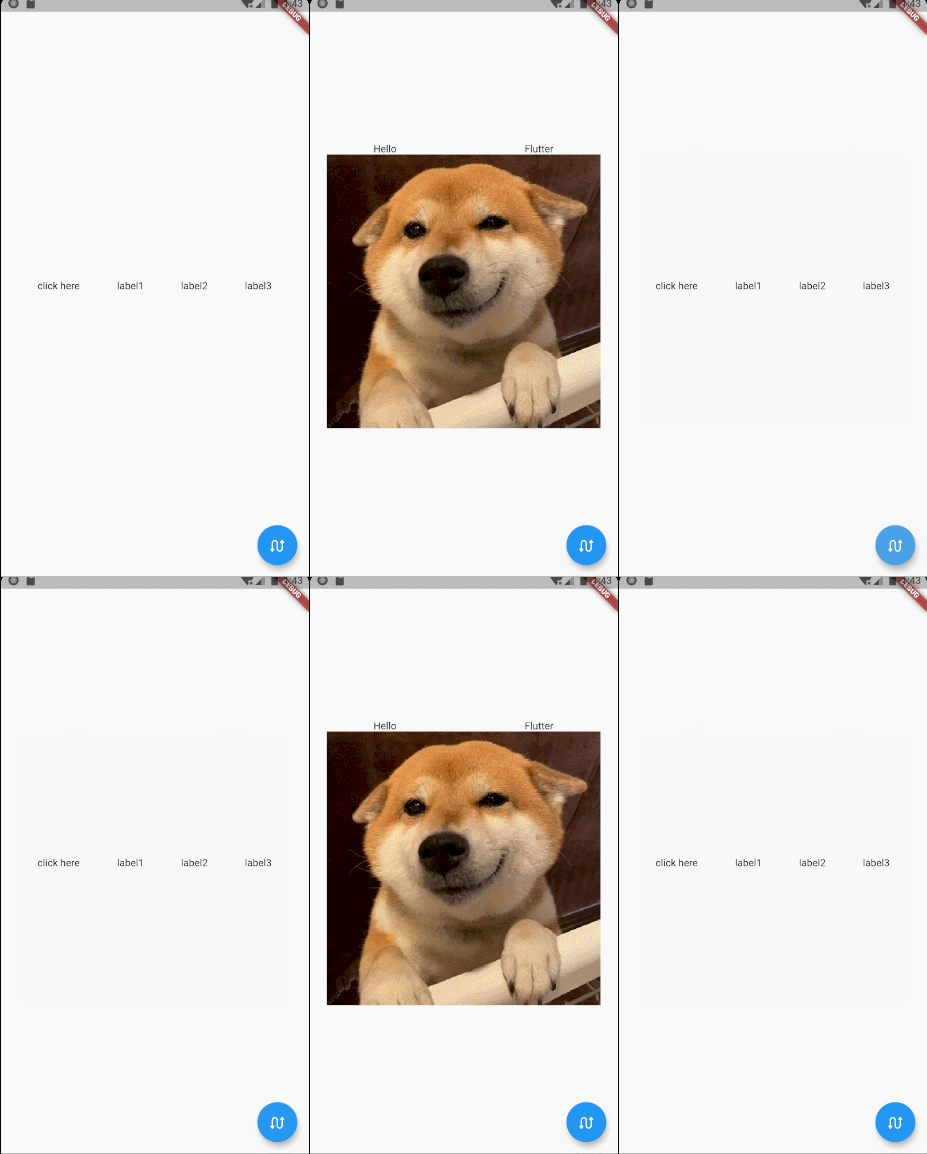
Try on Flutter
function getContent1()
    return Row:new({
        children={
            GestureDetector:new({
                onTap=function()
                    flutter.debugPrint("--------------onTap--------------")
                end,

                child=Text:new("click here")}),
            Text:new("label1"),
            Text:new("label2"),
            Text:new("label3"),
        },
        mainAxisAlign=MainAxisAlign.spaceEvenly,
    })
end

function getContent2()
    return Column:new({
        children={
            Row:new({
                children={Text:new("Hello"),Text:new("Flutter")},
                mainAxisAlign=MainAxisAlign.spaceAround
            }),
            Image:network('https://gitee.com/arcticfox1919/ImageHosting/raw/master/img/flutter_lua_test.png'
                ,{fit=BoxFit.cover})
        },
        mainAxisSize=MainAxisSize.min,
        crossAxisAlign=CrossAxisAlign.center
    })
end