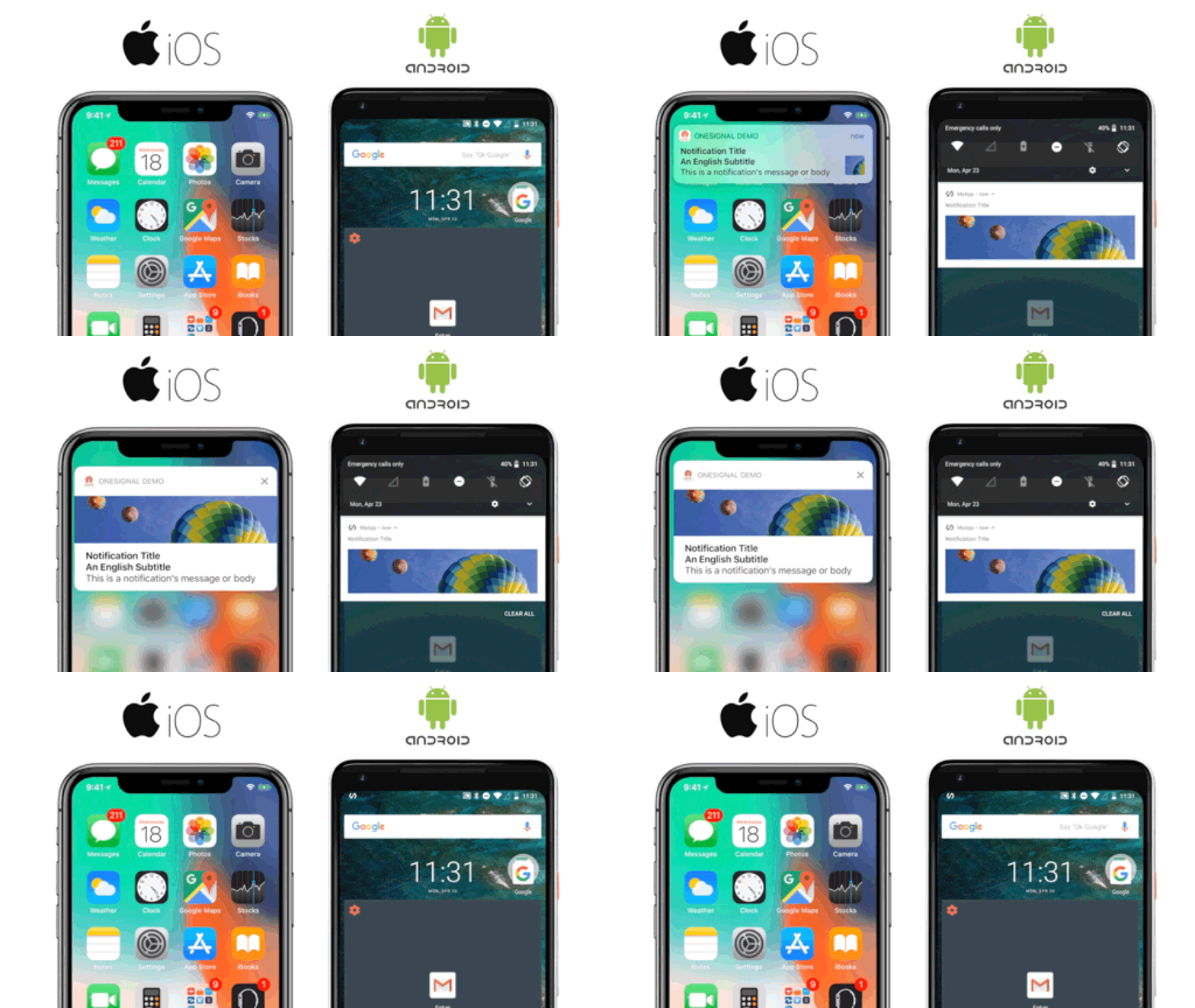
OneSignal é um serviço gratuito de notificação push para aplicativos móveis. Este plugin facilita a integração do seu aplicativo Flutter com o OneSignal.
Orientação gerada a partir de informações públicas. Apenas para referência.
O pacote onesignal_flutter permite que aplicativos Flutter se integrem ao OneSignal, um serviço gratuito de notificações push para aplicativos móveis. Ele simplifica o processo de envio e recebimento de notificações push em plataformas Android e iOS. Os desenvolvedores podem gerenciar facilmente inscrições de usuários, lidar com eventos de notificação e personalizar o comportamento das notificações dentro do aplicativo. O plugin é mantido pela OneSignal e oferece configuração sem problemas por meio do pub.dev. É ideal para aplicativos que precisam de engajamento em tempo real por meio de notificações.
Casos de uso
Enviar notificações push direcionadas
rastreamento de engajamento do usuário
Entrega de mensagens no aplicativo
Alertas em tempo real
Suporte de notificação multiplataforma
Principais recursos
Integração fácil com o Flutter
Suporte para Android e iOS
Manipulação de eventos de notificação
Gerenciamento de assinatura do usuário
Aparência personalizável de notificação
Indicado para
Aplicativos móveis que exigem notificações por push
Desenvolvedores usando o OneSignal
Aplicativos focados no engajamento do usuário
Startups procurando serviços de notificação gratuitos
Projetos multiplataforma
Considerações
Requer configuração da conta OneSignal
É necessário configurar a chave de API correta
Limitado ao backend do OneSignal
O iOS exige direitos adicionais
Permissões de execução em segundo plano necessárias
README original
Snapshot do README original do repositório-fonte vinculado. Consulte o repositório para o conteúdo mais recente.
OneSignal Flutter SDK
⚠️ Migration Advisory for current OneSignal customers
Our new user-centric APIs and v5.x.x SDKs offer an improved user and data management experience. However, they may not be at 1:1 feature parity with our previous versions yet.
If you are migrating an existing app, we suggest using iOS and Android’s Phased Rollout capabilities to ensure that there are no unexpected issues or edge cases. Here is the documentation for each:
If you run into any challenges or have concerns, please contact our support team at support@onesignal.com
OneSignal is a free email, sms, push notification, and in-app message service for mobile apps. This SDK makes it easy to integrate your Flutter iOS and/or Android apps with OneSignal.
If your app does not use OneSignal.Location, you can exclude the native OneSignal location module from iOS and Android builds.
For Swift Package Manager, CocoaPods, and Android Gradle builds, set
ONESIGNAL_DISABLE_LOCATION=true in the environment before resolving or
building. The value is case-insensitive, and 1 is also accepted.
In GitHub Actions, you can set it once at the job or step level so Swift Package
Manager, CocoaPods, and Gradle builds inherit it:
env:ONESIGNAL_DISABLE_LOCATION:true
With the location module disabled, calls to OneSignal.Location are ignored on Android and OneSignal.Location.isShared() returns false.
CocoaPods: app extension targets
CocoaPods only builds OneSignalXCFramework once when every target in your
Podfile resolves the same set of subspecs. If the sets differ, it creates one
pod variant per set, and each variant tries to write the same extracted
framework, which fails the build with:
error: Multiple commands produce '.../XCFrameworkIntermediates/OneSignalXCFramework/OneSignalCore/OneSignalCore.framework'
With location disabled the plugin resolves OneSignalXCFramework/OneSignal and
OneSignalXCFramework/OneSignalInAppMessages, so every Notification Service
Extension or Widget Extension target must declare those same two subspecs:
target 'OneSignalNotificationServiceExtension' do
  use_frameworks!
  pod 'OneSignalXCFramework/OneSignal', '>= 5.0.0', '< 6.0'
  pod 'OneSignalXCFramework/OneSignalInAppMessages', '>= 5.0.0', '< 6.0'
end
Without the environment variable set, the plugin resolves the umbrella pod, so
extension targets should declare pod 'OneSignalXCFramework' instead. Either
way the rule is the same: the app target and every extension target must request
an identical subspec set.
Applying the change (clearing cached packages)
The environment variable is only read when dependencies are resolved, and
each platform caches the resolved set. If you change the variable on an existing
project, you must clear the relevant cache and re-resolve in a shell where the
variable is exported. Otherwise a stale build can keep (or drop) the location
module regardless of the new value.
[!IMPORTANT]
When using Xcode or Android Studio, launch the IDE from a terminal that has
ONESIGNAL_DISABLE_LOCATION exported. An IDE launched from the Dock/Finder
does not inherit variables set only in your shell profile.
In Xcode, you can instead use File → Packages → Reset Package Caches (with
the variable exported), then build.
CocoaPods:
cd ios
pod deintegrate
rm -rf Pods Podfile.lock
ONESIGNAL_DISABLE_LOCATION=true pod install
Android Gradle (Gradle re-reads the variable on each configuration, so a clean
build is usually enough):
ONESIGNAL_DISABLE_LOCATION=true flutter build apk
On CI, key any DerivedData / SwiftPM / CocoaPods / Gradle caches on the value of
ONESIGNAL_DISABLE_LOCATION (or skip restoring them for no-location builds) so a
restored cache does not resurrect the location module.
Change Log
See this repository's release tags for a complete change log of every released version.
Support
Please visit this repository's Github issue tracker for feature requests and bug reports related specificly to the SDK.
For account issues and support please contact OneSignal support from the OneSignal.com dashboard.
Demo Project
To make things easier, we have published a demo project in the /example folder of this repository.
Supports:
Tested from iOS 8 to iOS 15
Tested from Android 4.0.3 (API level 15) to Android 12.0 (31)