Orientação gerada a partir de informações públicas. Apenas para referência.
Um pacote declarativo do Flutter projetado para criar jogos de cartas com interações intuitivas de arrastar e soltar, animações suaves e layouts personalizáveis. Ideal para jogos como Solitário e Guerra, ele simplifica a criação de mecânicas interativas de cartas, enquanto oferece suporte a múltiplas plataformas, incluindo Android, iOS, Web, macOS, Windows e Linux. O pacote enfatiza a produtividade do desenvolvedor por meio de uma API limpa e reativa.
Casos de uso
Construindo jogos do tipo solitário
Criando jogos de cartas multiplayer
Implementando mecânica de arrastar e soltar de cartões
Designando transições de cartão animadas
Desenvolvendo aplicativos de cartão multiplataforma
Principais recursos
UI declarativa para componentes de cartão
Suporte embutido para arrastar e soltar
Animações suaves para movimentação de cartões
Personalização de layout flexível
Compatibilidade multiplataforma
Indicado para
Desenvolvedores Flutter construindo jogos de cartas
Designers de jogos procurando componentes de cartas reutilizáveis
Aplicativos que exigem interfaces de cartão interativas
Projetos de jogo educacional ou casual
Considerações
Requer familiaridade com o sistema de widgets do Flutter
Pode ser necessário lógica adicional para regras de jogo complexas
O desempenho depende do número de cartões renderizados
Limitado a mecânicas de jogo baseadas em cartas
README original
Snapshot do README original do repositório-fonte vinculado. Consulte o repositório para o conteúdo mais recente.
card_game
A declarative Flutter package for building card games with beautiful animations. Create card games with minimal code by defining the rules and letting the package handle the rest!
A puzzle game where you move a stack of numbered disks between three columns, following the rule that larger numbers can't be placed on smaller ones.
• Custom numeric cards with CardGame<int, int> • Basic drag-and-drop with validation • maxGrabStackSize to limit moves to one card • Simple state management
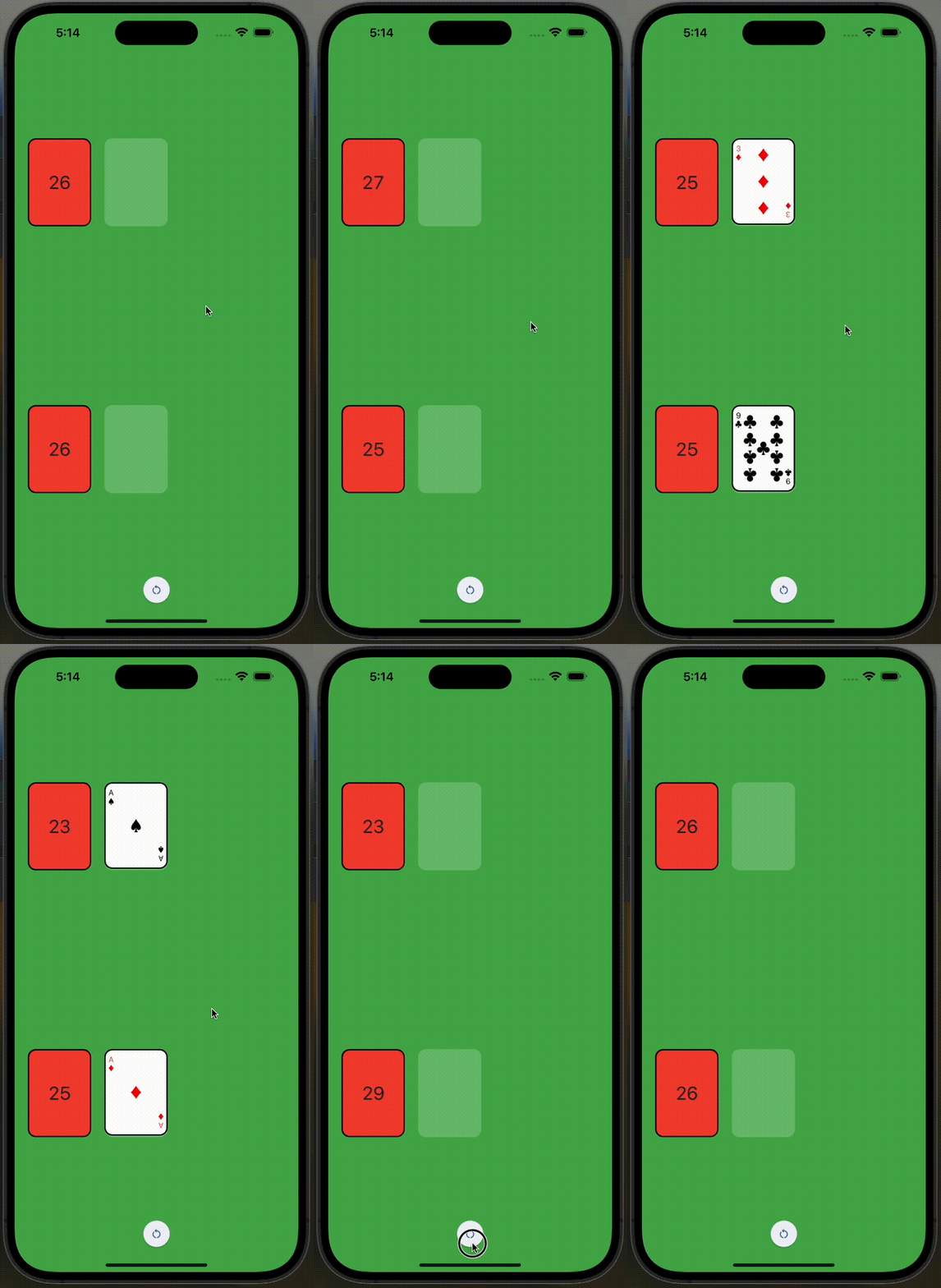
A two-player card game where each player draws from their deck, and the highest card wins both cards.
• SuitedCard with deckCardStyle() • Flipped cards with CardDeck.flipped • Card value comparison with SuitedCardValueMapper • Automatic card flip animations
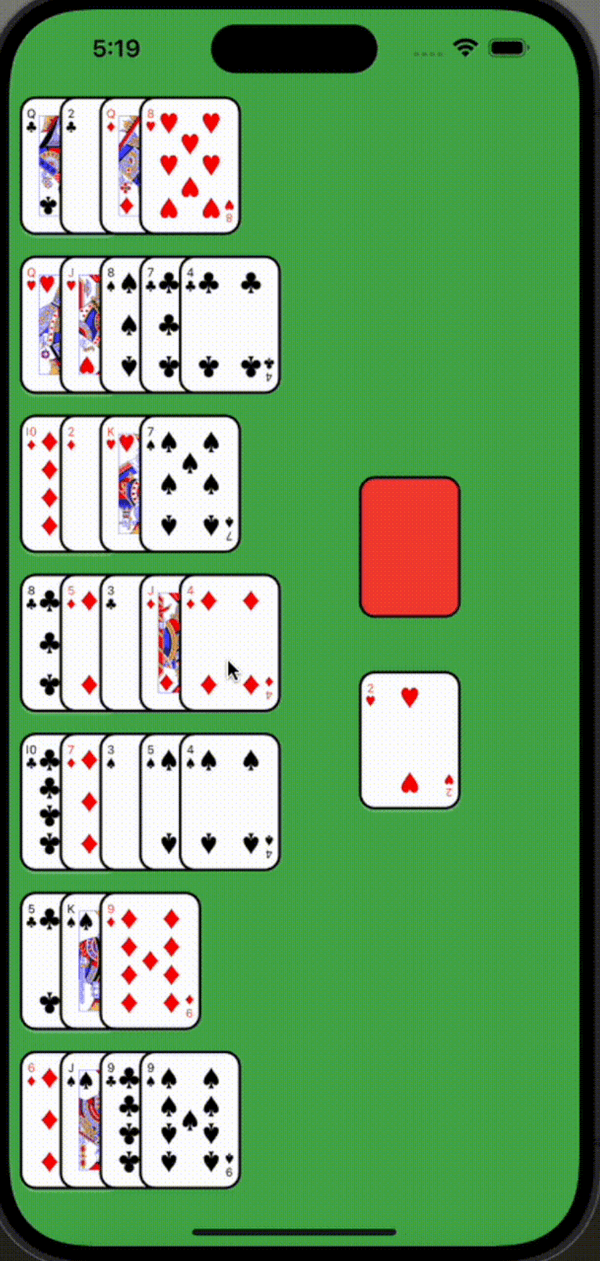
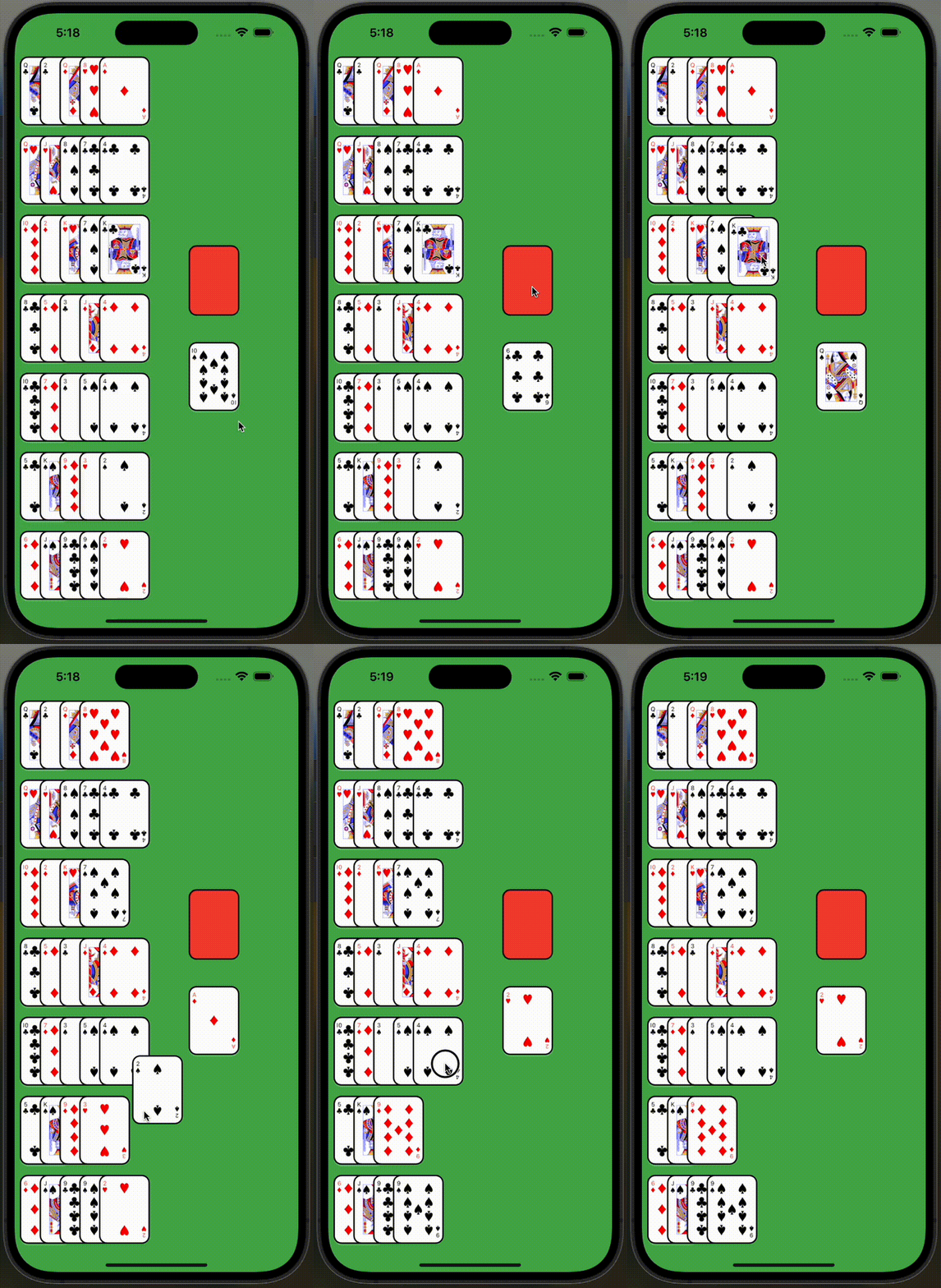
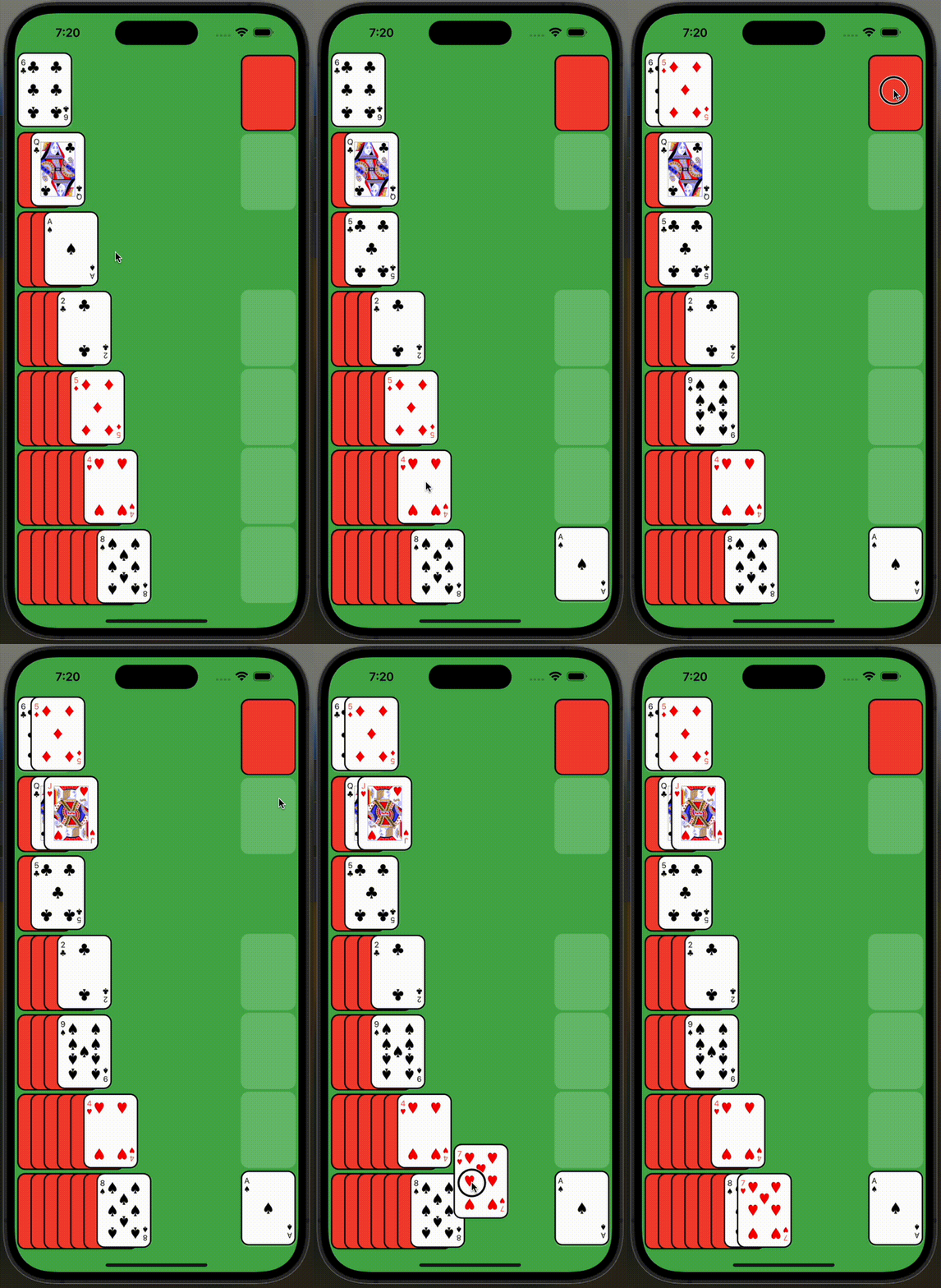
The classic solitaire game. Build foundation piles by suit from Ace to King, and move cards between columns following standard rules.
• Advanced card movement rules • Multiple card dragging • Complex state management • Card stacking with flipped and unflipped cards
Showcased in Production
Cards by JLogical
Cards is a full-featured card game collection built with the card_game package that demonstrates its capabilities in a production environment.
Features:
🎮 Multiple game variants: Golf Solitaire, Classic Solitaire, FreeCell
⚡ Auto-moves and smart hints
🎵 Sound effects
🎨 Customizable themes and card backs
🏆 Achievements and statistics
⏱️ Timer
📱 Fully responsive design
💾 Game saving and loading
The Cards project showcases advanced implementations including sophisticated game logic, multi-game support, persistent storage, and polished UI/UX. Check out the source code for inspiration on building your own complex card games.
Let's walk through implementing the Tower of Hanoi example, as it's the simplest game that demonstrates the core concepts:
classTowerOfHanoiextendsHookWidget{
// Number of disks to include in the gamefinalint amount;
constTowerOfHanoi({super.key, this.amount = 4});
// Initialize the game state with all disks in the first column// Each disk is represented by a number, where larger numbers represent larger disksList<List<int>> get initialCards => [
// First column contains all disks, largest (amount) to smallest (1)List.generate(amount, (i) => amount - i),
// Second and third columns start empty
<int>[],
<int>[],
];
@overrideWidgetbuild(BuildContext context) {
// Use Flutter Hooks to manage the state of our columns// Each column is a list of integers representing the disksfinal cardsState = useState(initialCards);
returnCardGame<int, int>(
// Use the built-in numeric card style to render our disks as numbers
style: numericCardStyle(),
children: [
SafeArea(
child: Column(
children: [
Row(
mainAxisAlignment: MainAxisAlignment.spaceEvenly,
children: cardsState.value
.mapIndexed((i, states) => CardColumn<int, int>(
// Each column needs a unique identifier
value: i,
// The cards (disks) currently in this column
values: states,
// Only allow moving one disk at a time
maxGrabStackSize: 1,
// Define the rules for when a disk can be placed here
canMoveCardHere: (move) {
final movingCard = move.cardValues.last;
final movingOnto = states.lastOrNull;
// Allow moves if:// 1. Column is empty (movingOnto == null)// 2. Moving disk is smaller than the top diskreturn movingOnto == null || movingCard < movingOnto;
},
// Handle the actual movement of cards between columns
onCardMovedHere: (move) {
// Create a copy of the current statefinal newCards = [...cardsState.value];
// Remove the moving card from its original column// Since maxGrabStackSize is 1, we know we're only removing one card
newCards[move.fromGroupValue].removeLast();
// Add the moved card to its new column// We use move.cardValues.first because maxGrabStackSize: 1 ensures// there's exactly one card being moved at a time
newCards[i].add(move.cardValues.first);
// Update the state, triggering a rebuild
cardsState.value = newCards;
},
))
.toList(),
),
Spacer(),
// Reset button to start the game overElevatedButton(
onPressed: () => cardsState.value = initialCards,
style: ButtonStyle(
shape: WidgetStatePropertyAll(CircleBorder())),
child: Icon(Icons.restart_alt),
),
],
),
),
],
);
}
}
This implementation shows:
Using numeric cards with the built-in numericCardStyle()
Setting up three columns using CardColumn
Implementing drag-and-drop rules with canMoveCardHere
Managing state with Flutter Hooks
Animating card movements automatically
For more complex examples, check out the implementations of the other games in the example folder.
Running the Examples
To try out the examples:
Clone the repository
Navigate to the example directory
Run flutter pub get
Run flutter run and select the example you want to try
Getting Started
Add the package to your pubspec.yaml:
dependencies:card_game:^1.0.0
Core Concepts
Card Types
The package uses two generic types:
T: The type of your cards (e.g., SuitedCard for playing cards or int for numeric cards)
G: The type for group identifiers (can be any type, often dynamic, String, or int)
Card Groups
Three types of card groups are available:
CardDeck: Shows only the top card, useful for draw piles
CardRow: Displays cards horizontally with customizable spacing
CardColumn: Displays cards vertically with customizable spacing
Card Styles
Built-in styles:
deckCardStyle(): Renders standard playing cards with a red back
numericCardStyle(): Renders numeric cards
Custom styles can be created by implementing CardGameStyle<T>.
Customization
Card Movement Rules
Control card movement with the following parameters:
CardColumn<T, G>(
  // ... other params
  canCardBeGrabbed: (index, card) => true, // Control which cards can be grabbed
  maxGrabStackSize: 1, // Limit how many cards can be grabbed at once
  canMoveCardHere: (moveDetails) => true, // Define rules for accepting cards
  onCardMovedHere: (moveDetails) {}, // Handle successful moves
)
Card Interaction and Appearance
Control card interaction and visual state:
CardColumn<T, G>(
// ... other params
onCardPressed: (card) {
// Handle card press events// Useful for flipping cards, selecting cards, or triggering game actions
},
isCardFlipped: (index, card) {
// Control whether specific cards are shown face-down// Return true to show the card's back, false to show its facereturnshouldCardBeFlipped(index, card);
},
)
Common use cases:
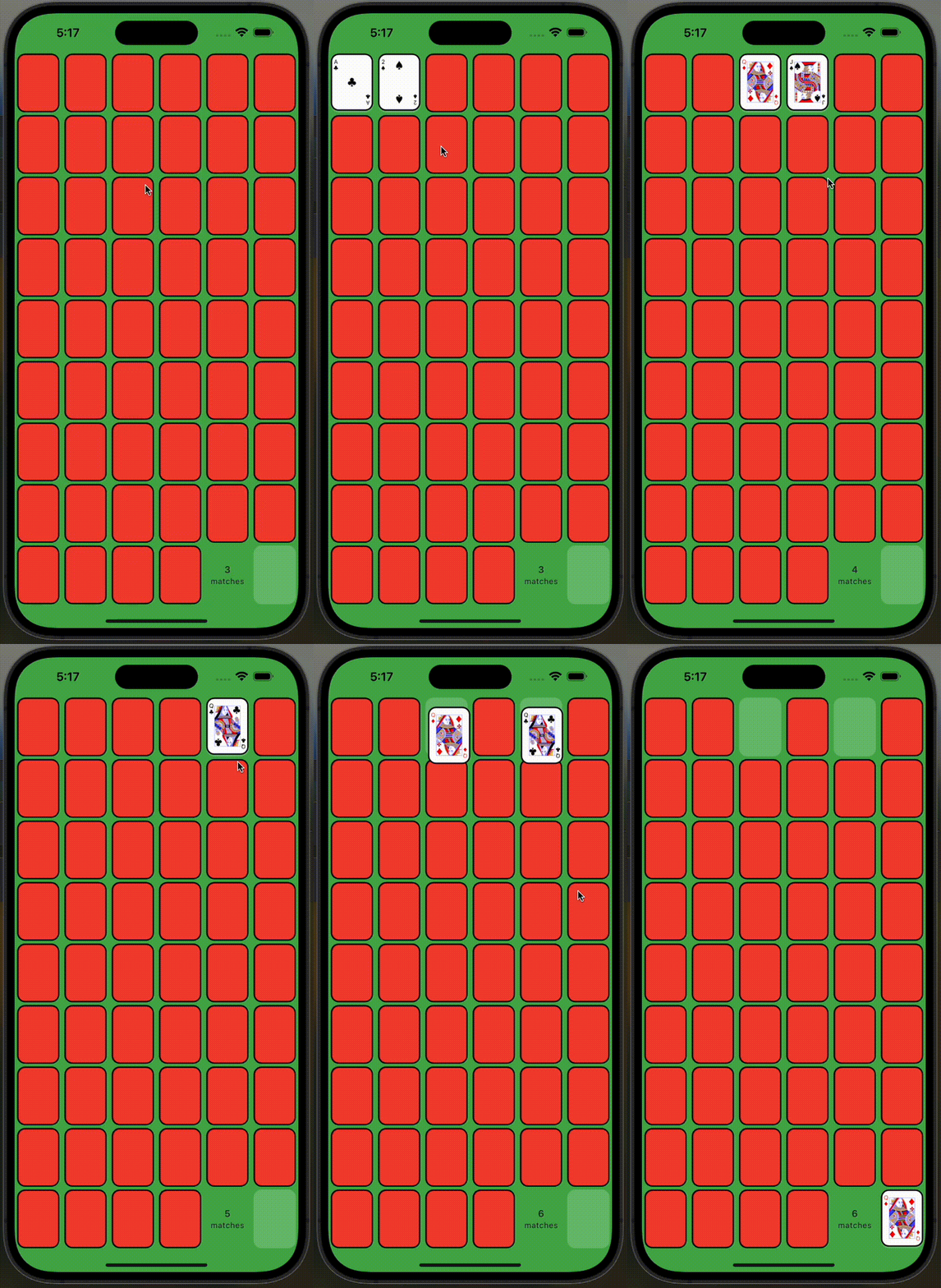
Memory Match: Use onCardPressed to flip cards when clicked
Solitaire: Use isCardFlipped to hide cards in the tableau
War: Use isCardFlipped with CardDeck.flipped for face-down draw piles
Each card value (T) must be unique within the game
Each group value (G) must be unique within the game
Always explicitly specify type parameters for CardGroups to match the parent CardGame. For example, if you have CardGame<SuitedCard, String>, your groups should be CardColumn<SuitedCard, String>, CardRow<SuitedCard, String>, or CardDeck<SuitedCard, String>. This helps prevent type errors and makes the code more maintainable
Use flutter_hooks or your preferred state management solution
Changes to card positions and flips are automatically animated
Card states (regular, highlighted, error) are handled automatically during drag and drop by default