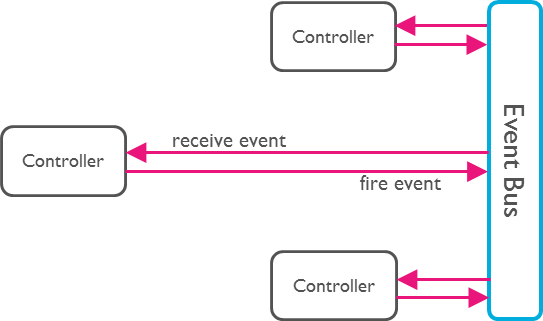
An Event Bus follows the publish/subscribe pattern. It allows listeners to
subscribe for events and publishers to fire events. This enables objects to
interact without requiring to explicitly define listeners and keeping track of
them.
Event Bus and MVC
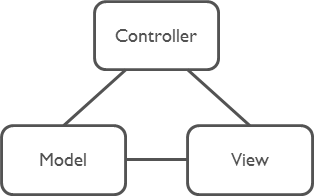
The Event Bus pattern is especially helpful for decoupling MVC
(or MVP) applications.
One group of MVC is not a problem.
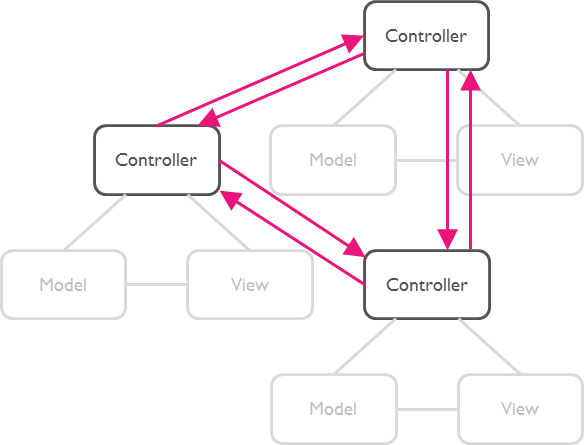
But as soon as there are multiple groups of MVCs, those groups will have to talk
to each other. This creates a tight coupling between the controllers.
By communication through an Event Bus, the coupling is reduced.
Usage
1. Create an Event Bus
Create an instance of EventBus and make it available to other classes.
Usually there is just one Event Bus per application, but more than one may be
set up to group a specific set of events.
Note:The default constructor will create an asynchronous event bus. To
create a synchronous bus you must provide the optional sync: true attribute.
2. Define Events
Any Dart class can be used as an event.
classUserLoggedInEvent{
User user;
UserLoggedInEvent(this.user);
}
classNewOrderEvent{
Order order;
NewOrderEvent(this.order);
}
3. Register Listeners
Register listeners for specific events:
eventBus.on<UserLoggedInEvent>().listen((event) {
// All events are of type UserLoggedInEvent (or subtypes of it).print(event.user);
});
Register listeners for all events:
eventBus.on().listen((event) {
// Print the runtime type. Such a set up could be used for logging.print(event.runtimeType);
});
About Dart Streams
EventBus uses Dart Streams
as its underlying mechanism to keep track of listeners. You may use all
functionality available by the Stream
API. One example is the use of StreamSubscriptions
to later unsubscribe from the events.