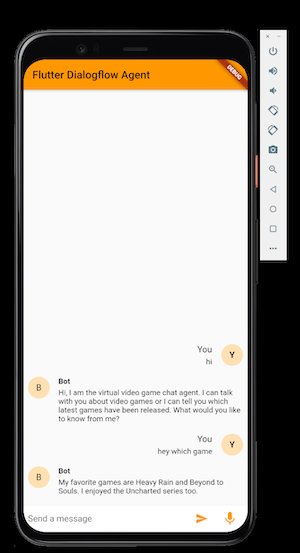
Dialogflow CX, V2 및 V2beta API와의 빠른 gRPC 기반 통합을 가능하게 하는 플러터 패키지입니다. 실시간 오디오 스트리밍을 지원하여 음성 기반 챗봇과 상호작용 애플리케이션에 적합합니다. gRPC를 통해 낮은 지연 시간 통신과 효율적인 데이터 처리를 제공하여 REST보다 성능이 향상됩니다. 실시간 오디오 입력 및 출력을 갖춘 고급 대화 인터페이스를 개발하는 개발자에게 특히 유용합니다.
사용 사례
실시간 음성 챗봇
채팅 애플리케이션에서의 오디오 스트리밍
고성능 Dialogflow 통합
인터랙티브 고객 지원 봇
음성 제어 앱 기능
다중 회화 시스템
주요 기능
gRPC 기반의 API 통신
Dialogflow CX, V2 및 V2beta 지원
실시간 오디오 스트리밍
저지연 응답
서비스 계정을 통한 보안 인증
크로스 플랫폼 호환성
적합한 대상
음성 기능을 갖춘 앱을 개발하는 개발자
고성능 Dialogflow 통합이 필요한 팀
오디오 입력/출력이 필요한 애플리케이션
Dialogflow를 사용하는 챗봇 개발자
실시간 상호작용을 갖춘 모바일 앱
고려 사항
gRPC 설정 및 구성이 필요합니다
서비스 계정 자격 증명이 필요합니다
Dialogflow 전용 사용 사례에 한정
추가 오디오 처리가 필요할 수 있습니다
플랫폼별 오디오 권한이 필요합니다
간단한 REST 전용 워크플로우에는 적합하지 않습니다
원본 README
연결된 소스 저장소의 README 원문 스냅샷입니다. 최신 내용은 저장소에서 확인하세요.
Auto-generated Flutter Dialogflow library for detecting intents using gRPC.
A faster integration with the Dialogflow API and also the possibility to do audio streaming.
Built by Google Developer Advocate for Dialogflow, Lee Boonstra
Disclaimer: This package is made by Google developer advocate Lee Boonstra. This is not an official Google package.
This package is provided as-is, without warranty or representation for any use or purpose.
Feel free to improve this package, and contribute.
Before making use of this package, enable the Dialogflow API in the Google Cloud console.
gcloud services enable dialogflow.googleapis.com
Afterwards, download a service account JSON file which has Dialogflow Integration access rights,
and store this in your project. (e.g. assets/credentials.json)
Example
Edit the pubspec.yaml file with the dialogflow_grpc dependency.
And point to your service account (e.g. assets/credentials.json)
...dependencies:dialogflow_grpc:any...# The following section is specific to Flutter.flutter:# The following line ensures that the Material Icons font is# included with your application, so that you can use the icons in# the material Icons class.uses-material-design:trueassets:-assets/credentials.json
Import this package in your code. Load your service account,
and create a DialogflowGrpc instance:
CAUTION: When working with production apps
Storing the service account in a client asset folder (or even in a secure key client keychain) can be dangerous if it’s not handled well. First of all, you will need to be very careful with your service accounts. Which read and access rights will you give your components? When you give admin rights to Google Cloud’s compute engine, you can imagine that attackers could hack and decompile your app. When they get access to your compute engine, they could drive you into costs by for example, mining bitcoins for them. Now, even when you don’t give compute access rights to your Google Cloud service accounts, you still won’t expose your keys. Even though for Dialogflow, it only gives you access to your chatbot within your project, it might be possible for attackers to read PII data from the chat history if your end-users were sharing PII data in the chat. That can be a huge problem.
On top of that, it’s not so easy to change service account keys in applications, as you don’t want the app to stop working for current users. So how can you serve service accounts and keys secure in mobile clients? By, for example, building a mechanism to rotate (a second set of) keys. Like working with JSON Web Tokens (JWT), an Internet proposed standard for creating data with optional signature and optional encryption whose payload holds JSON that asserts some number of claims. The tokens are signed either using a private secret or a public/private key. Or you can run (parts) of your integration on a server.
Example: DetectIntent
Detecting an intent based on a text input:
    var data = await dialogflow.detectIntent(text, 'en-US');
    print(data.queryResult.fulfillmentText);
Example: StreamingDetectIntent
Detecting an intent based on an audio stream:
var biasList = SpeechContextV2Beta1(
phrases: [
'Dialogflow CX',
'Dialogflow Essentials',
'Action Builder',
'HIPAA'
],
boost: 20.0
);
var config = InputConfigV2beta1(
encoding: 'AUDIO_ENCODING_LINEAR_16',
languageCode: 'en-US',
sampleRateHertz: 8000,
singleUtterance: false,
speechContexts: [biasList]
);
// import 'dart:io' show Platform;// On iOSif (Platform.isIOS) {
config = InputConfigV2beta1(
encoding: 'AUDIO_ENCODING_LINEAR_16',
languageCode: 'en-US',
sampleRateHertz: 16000,
singleUtterance: false,
speechContexts: [biasList]
);
}
// Make the streamingDetectIntent call, with the InputConfig and the audioStreamfinal responseStream = dialogflow.streamingDetectIntent(config, _audioStream);
responseStream.listen((data) {
print(data);
});
Official API documentation: https://cloud.google.com/dialogflow/es/docs/reference/rpc
Example: Tests
Make sure you have a service account: assets/credentials.json
flutter test test/v2_test.dart
flutter test test/v2beta1_test.dart
Environments
MacOS
https://flutter.dev/desktop
In order to run dialogflow_grpc in your MacOS app, enable internet.
Edit the .entitlements files in your macos/Runner/ folder.
In order to build the example for Android devices;
the audio recorder library sound_stream requires a minSdk of at least 21. So let's change this in android/app/build.gradle in the defaultConfig block.
Also, don't forget to go into the virtual device settings and enable your microphone.