Sherpa-ONNX는 다음 세대 Kaldi와 ONNX Runtime을 사용하여 오프라인 음성 인식(ASR), 음성 합성(TTS), 화자 분리 및 화자 인식을 가능하게 하는 Flutter/Dart 패키지입니다. 인터넷 연결 없이 완전히 작동하므로 개인정보 보호가 중요한 또는 지연 시간이 짧은 애플리케이션에 적합합니다. 크로스플랫폼 배포를 위해 설계되어 Android, iOS, macOS, Windows, Linux를 지원합니다. 최적화된 ONNX 모델을 활용하여 장치 내에서 효율적인 추론을 수행하여 장치에서 빠르고 정확한 음성 처리를 보장합니다.
React Native wrapper and demo app for validating sherpa-onnx on iOS,
Android, and Web, including ASR, TTS, VAD, KWS, speaker ID, diarization,
language ID, punctuation, audio tagging, and speech enhancement.
A voice-typing application for the Linux desktop (GTK4/Adwaita).
It captures microphone audio, transcribes it offline using Sherpa ONNX ASR models,
optionally polishes the text with an LLM, and types the result into the active window
via XDG Remote Desktop Portal keyboard simulation.
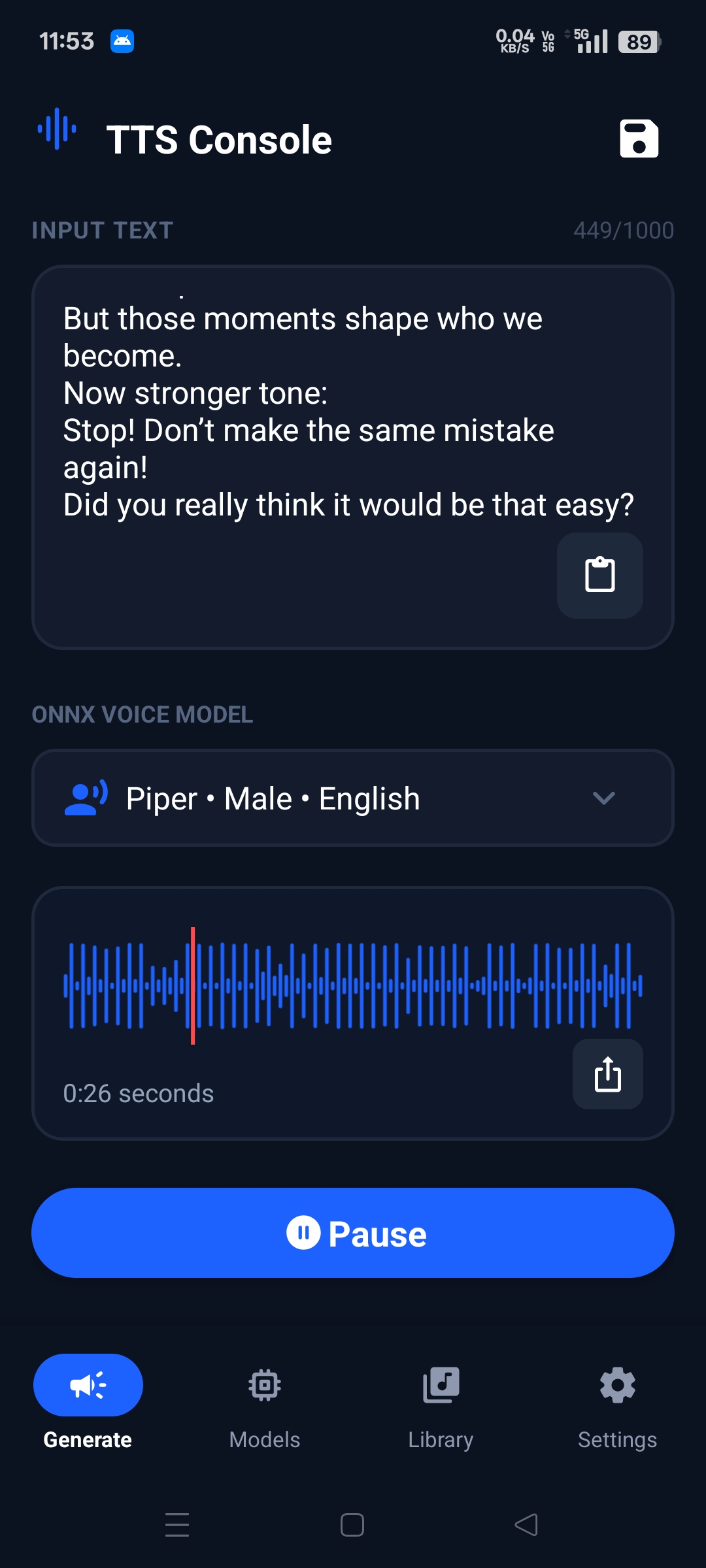
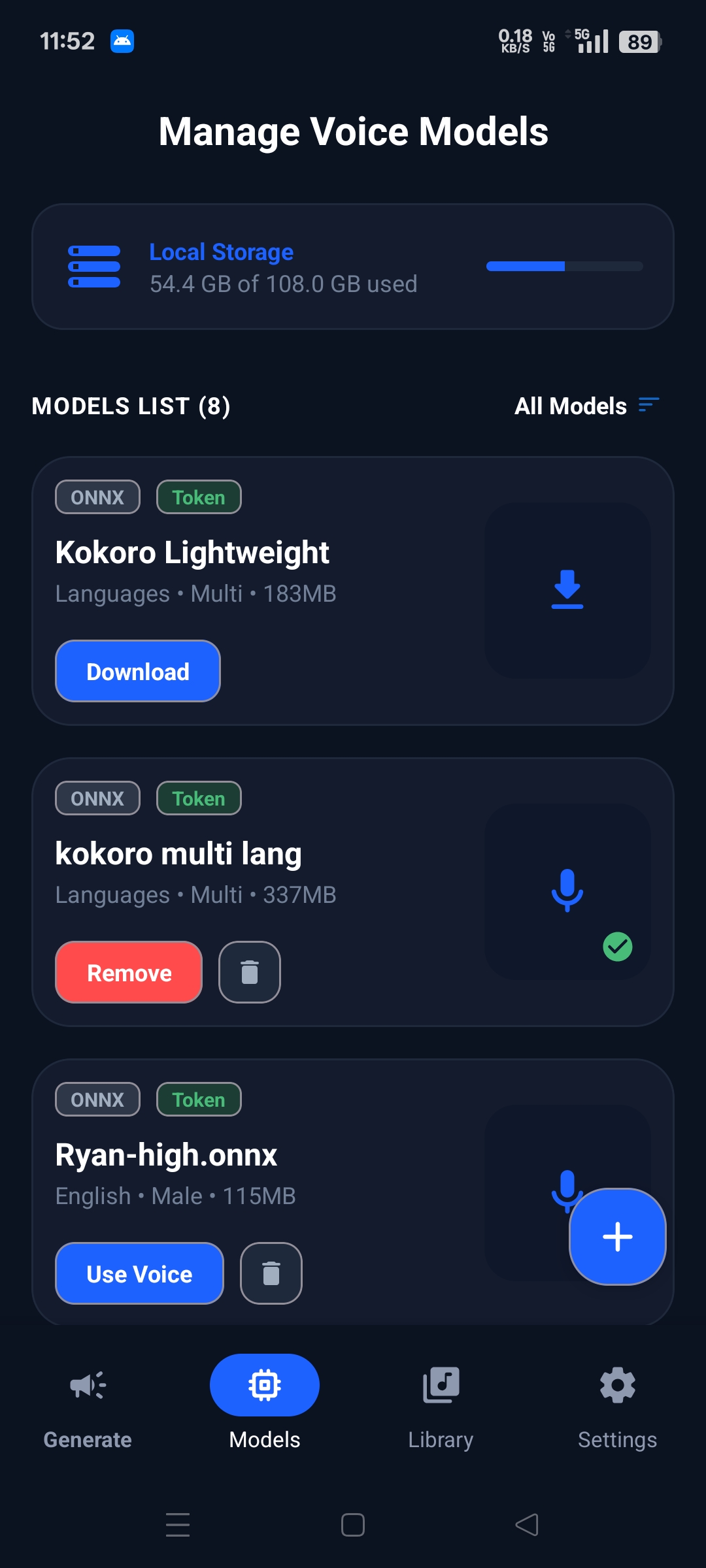
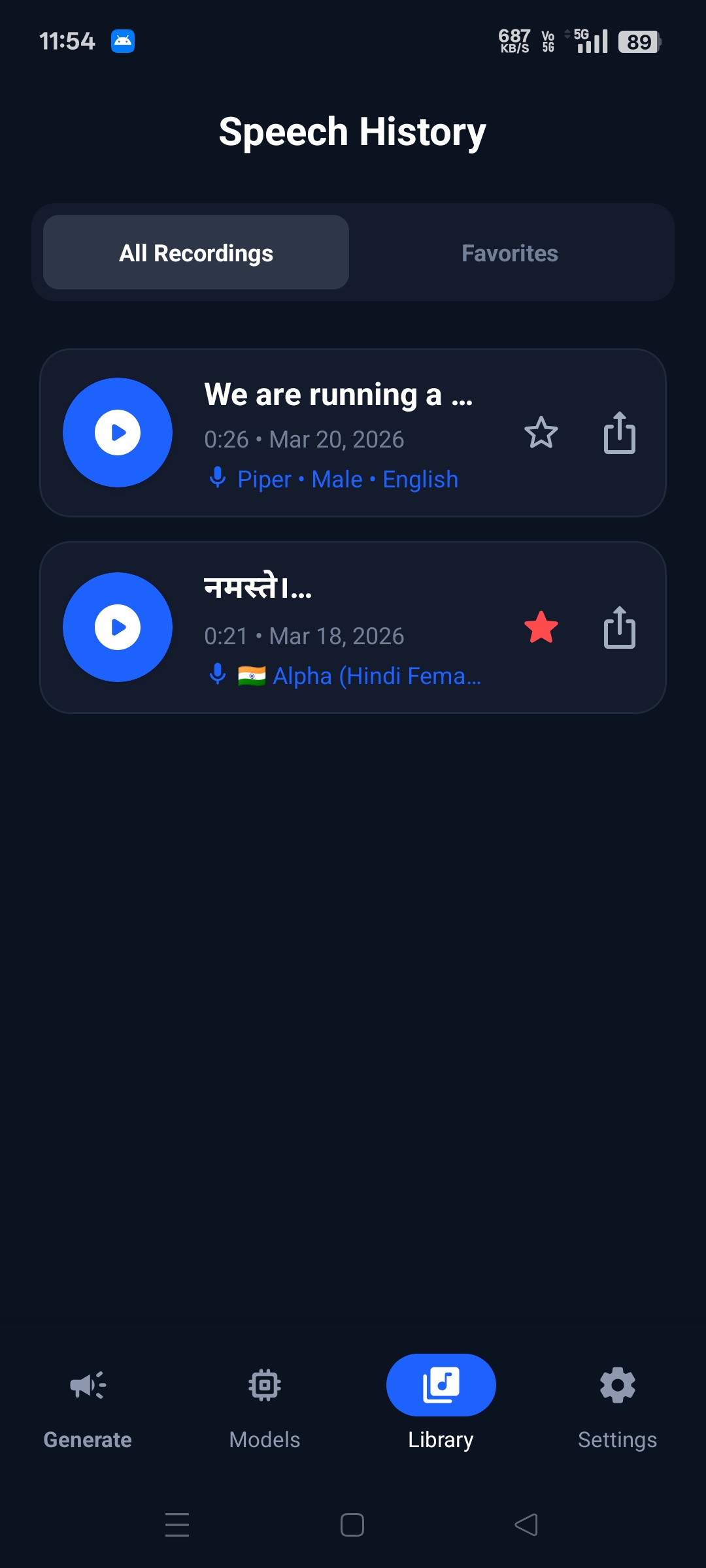
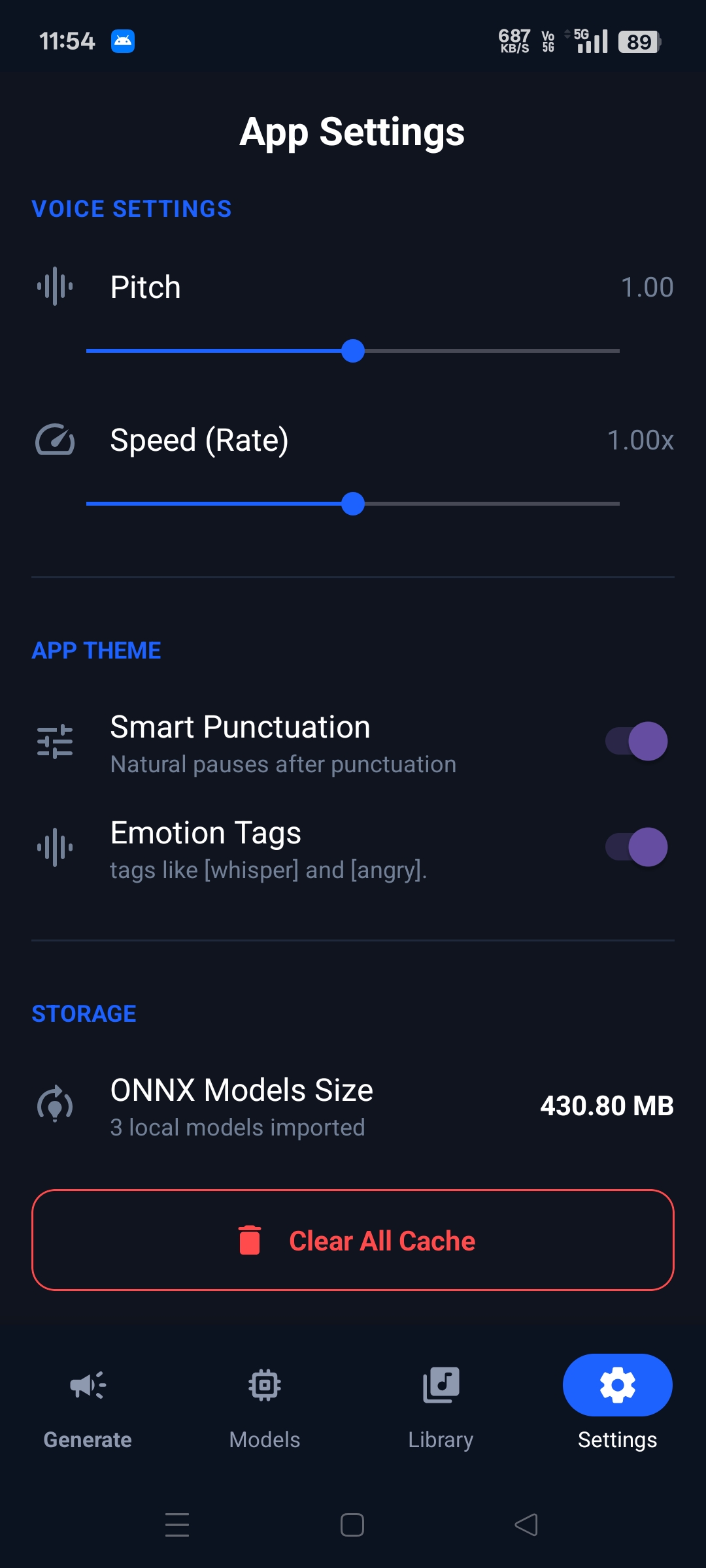
VoxSherpa TTS is a 100% offline Android Text-to-Speech app powered by Sherpa-ONNX.
It supports Kokoro-82M, Piper, and VITS engines with multilingual support including
Hindi, English, British English, Japanese, Chinese and 50+ more languages.
BreezeAPP is a mobile AI application developed for both Android and iOS platforms.
Users can download it directly from the App Store and enjoy a variety of features
offline, including speech-to-text, text-to-speech, text-based chatbot interactions,
and image question-answering
Smart glasses OS, with dozens of built-in apps. Users get AI assistant, notifications,
translation, screen mirror, captions, and more. Devs get to write 1 app that runs on
any pair of smart glasses.
Local offline voice input plugin for Fcitx5 (Linux input method framework).
It uses C++ with offline ASR for speech recognition, supporting push-to-talk,
command mode, and optional LLM post-processing.
A VS Code extension for hands-free voice-activated coding. It uses sherpa-onnx for real-time
keyword spotting (KWS) to detect custom wake phrases and trigger VS Code commands by voice.
Audio capture is handled by decibri, a
cross-platform Node.js microphone streaming library with prebuilt native binaries.
SmartSub is a local-first cross-platform desktop application for the complete subtitle production pipeline: audio/video transcription, subtitle translation, proofreading, and subtitle burning/muxing.
It natively integrates sherpa-onnx to power three offline ASR engines — FunASR, Qwen3-ASR, and FireRedASR — delivering high-accuracy Chinese and multilingual speech recognition entirely on-device, with no file uploads required.
Talk to your computer. Fono is an open-source (GPL-3.0), complete voice-AI
stack (speech-to-text, text-to-speech, a local LLM, wake word, speaker ID) in
one small binary for the Linux, macOS, and Windows desktop. Press a key and
speak: it types into any app, answers as a voice assistant, or drives a coding
agent.
It uses sherpa-onnx's Supertonic TTS models for text-to-speech, with the
Supertonic text frontend ported to Rust. See also
#3750, which fixes dropped
diacritics in the Supertonic frontend for Romanian, Czech, Polish, Hungarian,
Turkish, Vietnamese, and other non-English Latin-script languages.
Domia is an open-source local AI companion you talk to, living entirely on
hardware you own. Each Domia is its own character, with a distinct
personality, voice, emotional state, and memory of you and its place — and it
acts, not just talks: skills connect it to the real world over MCP, Home
Assistant included. Domia nodes form a local peer-to-peer mesh that shares
speech and reasoning compute, while room satellites bring each companion into
the spaces where you live without giving up its identity. No cloud, no
accounts, and no data leaving your network.
Domia runs sherpa-onnx in-process for keyword spotting, voice activity
detection, streaming and offline speech recognition, and text-to-speech.
Speech engines and models are selected through per-companion configuration,
making it easy to match supported sherpa-onnx models to different hardware.
A realtime full-duplex voice runtime for AI coding agents
(Claude Code, Codex, OpenCode, and other ACP agents).
It uses sherpa-onnx keyword spotting with the 3M-parameter
zh-en transducer model to implement a local voice wake word:
the app sleeps on idle but keeps the microphone open,
and the wake phrase brings the session back with no cloud calls.