搜索插件、代码仓与 APP 分类

google_maps_cluster_manager 封面
插件详情v3.1.0

google_maps_cluster_manager

基于 Geohash 的简单 Flutter 聚合库,用于 Google 地图。

近 30 天下载
3020
喜欢数
311
Pub 分数
90

安装插件

flutter pub add google_maps_cluster_manager

插件介绍

基于插件公开信息、社区数据与项目使用情况整理的选型参考。

一个简单的 Flutter 聚类库,用于 Google 地图,使用 Geohash 高效地将附近的标记分组。它通过将多个点合并为聚类来减少地图杂乱,从而在显示大量位置时提高性能和用户体验。该库与 Google Maps for Flutter 无缝集成,提供可自定义的聚类图标和流畅的动画效果。非常适合需要在密集标记集中保持视觉清晰度的应用程序。

适合场景

  • 在地图上显示大型数据集
  • 通过大量标记提高地图性能
  • 提升基于位置的应用程序的用户体验
  • 可视化地理空间数据集群
  • 创建交互式地图界面

主要特点

  • 基于GeoHash的聚类
  • 可自定义的集群图标
  • 流畅的动画过渡
  • 与 Google 地图轻松集成
  • 支持动态标记更新

适合对象

  • 具有高密度位置数据的应用程序
  • 地图密集型应用
  • 寻求轻量级聚类的开发者
  • 使用 Google Maps 的 Flutter 项目
  • 需要高效标记管理的用户

使用建议

  • 需要 Google Maps for Flutter 设置
  • 仅限 Google 地图平台
  • 聚类逻辑可能需要针对特定用例进行调整
  • 不支持非geohash方法的内置支持
  • 依赖外部仓库进行更新

原始 README

以下为关联源码仓库的 README 原文快照,最新内容请访问源码仓库。

pub package

Flutter Cluster Manager for Google Maps

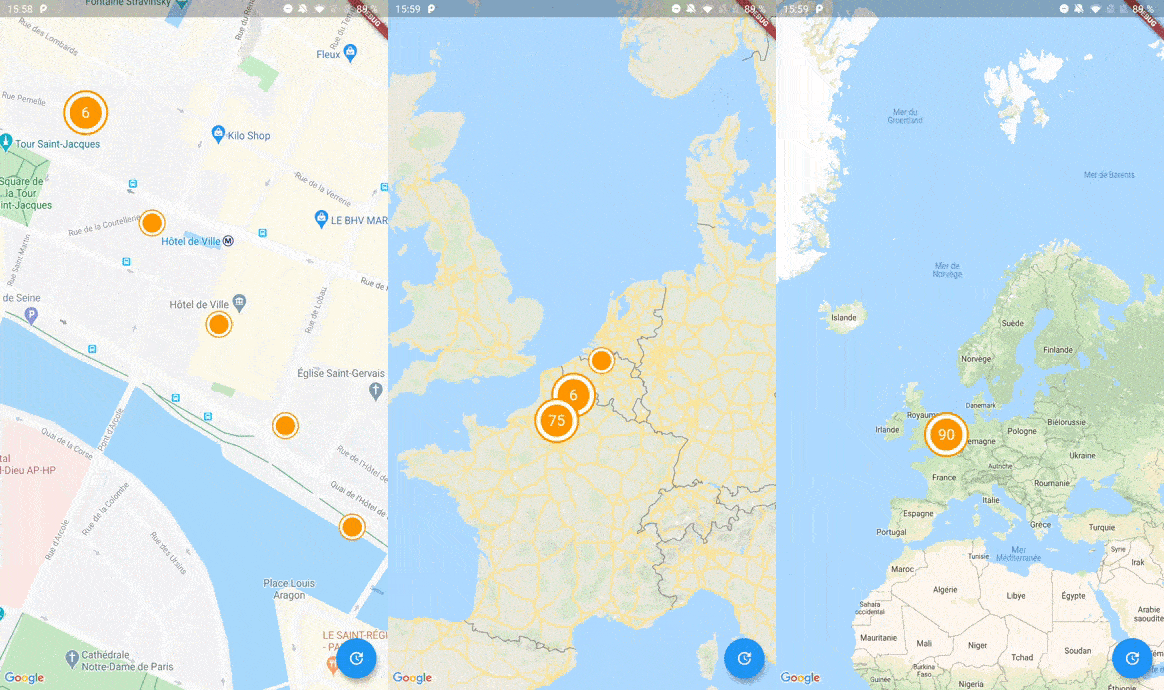
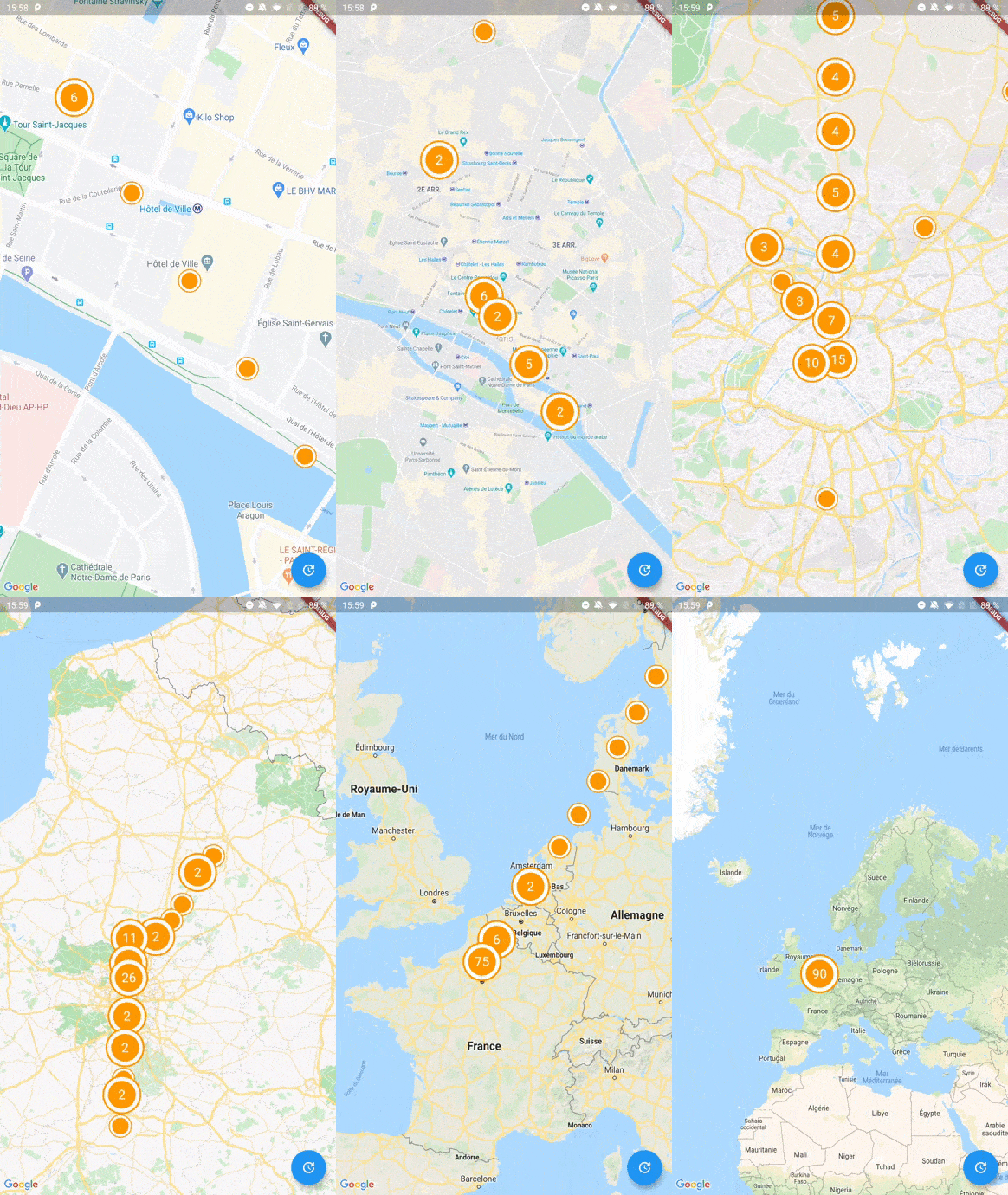
Screenshot

A Flutter package to cluster items on a Google Maps widget based on Geohash. Highly inspired by clustering_google_maps

Usage

To use this package, add google_maps_cluster_manager as a dependency in your pubspec.yaml file.

Getting Started

Your map items has to use ClusterItem as a mixin (or extends this class) and implements the LatLng location getter.

class Place with ClusterItem {
  final String name;
  final LatLng latLng;

  Place({required this.name, required this.latLng});

  @override
  LatLng get location => latLng;
}

To start with Cluster Manager, you have to initialize a ClusterManager instance.

ClusterManager<Place>(
    _items, // Your items to be clustered on the map (of Place type for this example)
    _updateMarkers, // Method to be called when markers are updated
    markerBuilder: _markerBuilder, // Optional : Method to implement if you want to customize markers
    levels: [1, 4.25, 6.75, 8.25, 11.5, 14.5, 16.0, 16.5, 20.0], // Optional : Configure this if you want to change zoom levels at which the clustering precision change
    extraPercent: 0.2, // Optional : This number represents the percentage (0.2 for 20%) of latitude and longitude (in each direction) to be considered on top of the visible map bounds to render clusters. This way, clusters don't "pop out" when you cross the map.
    stopClusteringZoom: 17.0 // Optional : The zoom level to stop clustering, so it's only rendering single item "clusters"
);

When your GoogleMapController is created, you have to set the mapId with the setMapId method :

_manager.setMapId(controller.mapId);

You are able to add an new item to the map by calling addItem method on your ClusterManager instance. You can also completely change the items on your maps by calling setItems method.

You can customize the icon of a cluster by using Future<Marker> Function(Cluster<T extends ClusterItem>) markerBuilder parameter.

static Future<Marker> Function(Cluster) get markerBuilder => (cluster) async {
  return Marker(
    markerId: MarkerId(cluster.getId()),
    position: cluster.location,
    onTap: () {
        print(cluster.items);
    },
    icon: await getClusterBitmap(cluster.isMultiple ? 125 : 75,
    text: cluster.isMultiple? cluster.count.toString() : null),
  );
};

static Future<BitmapDescriptor> getClusterBitmap(int size, {String text?}) async {
  final PictureRecorder pictureRecorder = PictureRecorder();
  final Canvas canvas = Canvas(pictureRecorder);
  final Paint paint1 = Paint()..color = Colors.red;

  canvas.drawCircle(Offset(size / 2, size / 2), size / 2.0, paint1);

  if (text != null) {
    TextPainter painter = TextPainter(textDirection: TextDirection.ltr);
    painter.text = TextSpan(
    text: text,
    style: TextStyle(
        fontSize: size / 3,
        color: Colors.white,
        fontWeight: FontWeight.normal),
    );
    painter.layout();
    painter.paint(
      canvas,
      Offset(size / 2 - painter.width / 2, size / 2 - painter.height / 2),
    );
  }

  final img = await pictureRecorder.endRecording().toImage(size, size);
  final data = await img.toByteData(format: ImageByteFormat.png);

  return BitmapDescriptor.fromBytes(data.buffer.asUint8List());
}

Every cluster (even one item clusters) is rendered by the library as a Cluster<T extends ClusterItem> object. You can differentiate single item clusters from multiple ones by using the isMultiple variable (or the count variable). This way, you can create different markers icon depending on the type of cluster.

You can create multiple managers for a single map, see the multiple.dart example.

Complete Basic Example

See the example directory for a complete sample app.

所属分类

依赖

依赖清单 1 项

  • google_maps_flutter_platform_interface^2.4.3

源码仓库

使用此插件的项目